
Paid partnership with Rado
The annual designjunction event, a cornerstone of the vibrant London Design Festival, underwent a significant and exciting transformation this year, relocating from its established home in King’s Cross to the culturally rich Southbank. This pivotal move also heralded the arrival of a new, prestigious headline sponsor: Rado. The revered Swiss watch brand has consistently demonstrated that exceptional design is not merely an aesthetic addition but an intrinsic and fundamental element of its core identity and enduring legacy. Rado’s profound commitment to design excellence is vividly showcased through its ongoing collaborations with some of the world’s most visionary and innovative designers, who regularly contribute to the creation of groundbreaking new timepieces that push the boundaries of horological artistry. Beyond these celebrated partnerships with established names, Rado also dedicates itself to nurturing the next generation of creative talent by orchestrating prestigious design competitions around the globe. These competitions, like the Rado Star Prize, offer an invaluable platform for young designers who are just beginning to carve their paths in the competitive world of design, providing them with crucial exposure and recognition.
For several months, I have had the distinct privilege of collaborating with Rado, a brand that resonates deeply with my personal values and professional interests. Their unwavering dedication to placing design at the forefront of everything they do is complemented by a shared passion for another one of my great loves: tennis. Rado proudly serves as the official timekeeper for 15 major tennis tournaments across the world, a testament to their unparalleled precision, reliability, and commitment to excellence. However, it is their inspiring support for emerging designers through the acclaimed Rado Star Prize that truly encapsulates their forward-thinking ethos and dedication to shaping the future of design. It is this particular initiative that I am most eager to delve into and highlight here, showcasing how Rado is actively fostering innovation and creativity within the global design community.
The Rado Star Prize UK 2018: A Celebration of Future Design
The Rado Star Prize has firmly established itself as a globally recognized and highly respected design competition, renowned for its diverse international editions that consistently unearth and showcase exceptional creative talent from various corners of the world. Following a remarkably successful inaugural UK edition last year, which saw industrial designer Joachim Froment awarded the judges’ prize for his ingeniously crafted 0.6 Chair, the competition made a triumphant return for its second UK iteration. The compelling and thought-provoking theme for the 2018 edition, ‘On Time / Time Off’, invited designers to delve into profound concepts surrounding the passage of time, the myriad ways it enriches daily life, and the creation of innovative products that enhance user awareness of how they consciously choose to spend their valuable time. This overarching theme challenged entrants to move beyond mere functional utility, encouraging them to explore the deeper emotional, experiential, and even philosophical dimensions of design.
The competition attracted an impressively diverse array of groundbreaking submissions, with shortlisted projects spanning a wide spectrum of design disciplines. These included sophisticated lighting solutions, exquisitely crafted artisanal ceramics, contemporary furniture pieces, and pioneering manufacturing processes that demonstrated a clear vision for the future of production. From this formidable pool of talent, ten outstanding finalists were carefully selected, earning the prestigious opportunity to exhibit their cutting-edge designs at designjunction, a highlight event during the globally renowned London Design Festival. The stakes for these aspiring designers were exceptionally high: the ultimate winner not only received a substantial £5000 cash prize, providing crucial financial support for their burgeoning creative careers, but also a highly coveted Rado timepiece, a symbol of timeless design, Swiss precision, and enduring innovation. This dual recognition offers both vital financial backing and a significant endorsement from a leading luxury brand, effectively propelling emerging talents onto the international stage and cementing their status within the design industry.
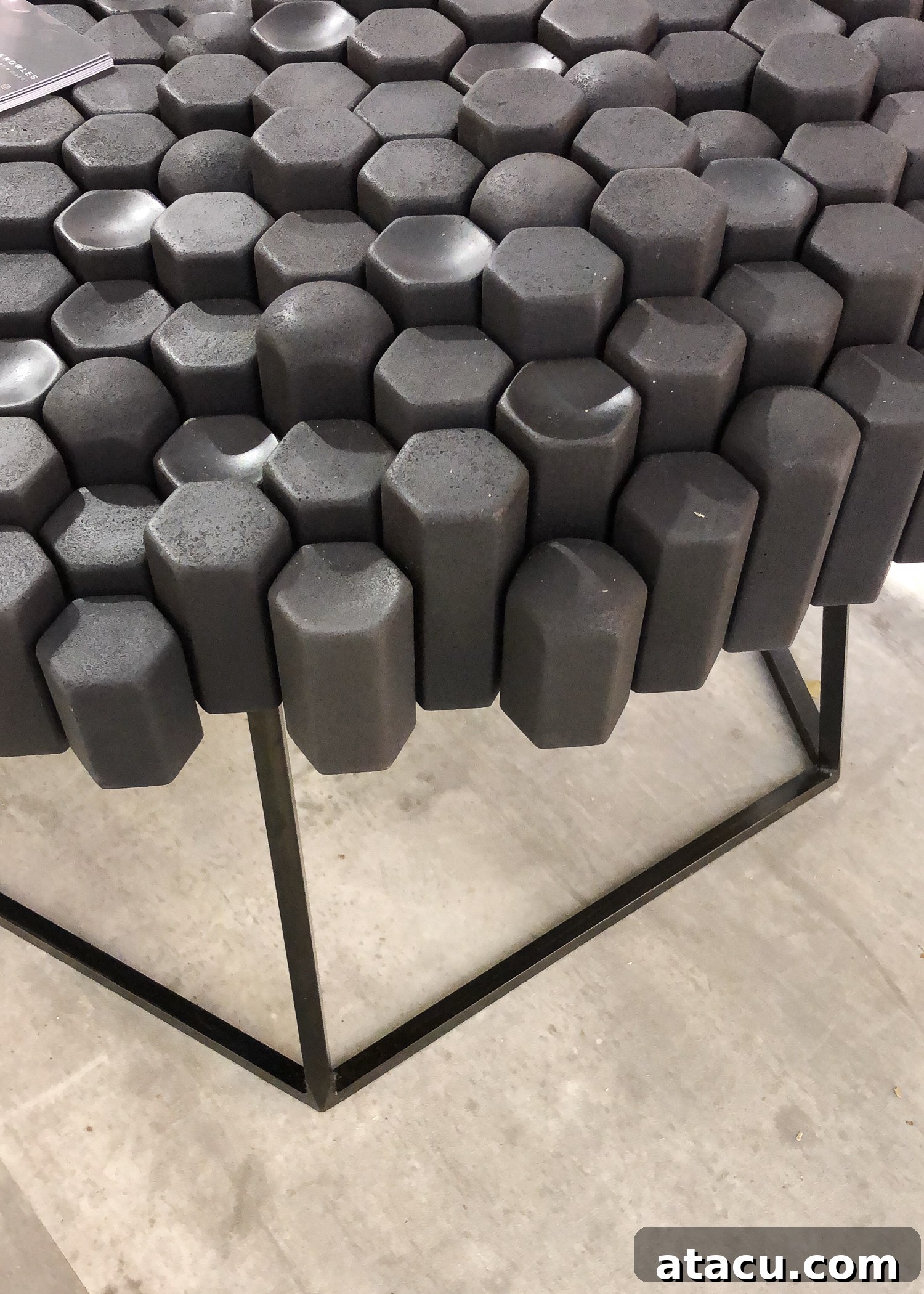
Rado Star Prize winner David Knowles and his GC18 table
The Judge’s Choice: David Knowles and the GC18 Coffee Table – A Tribute to Natural Grandeur
The highly anticipated 2018 Rado Star Prize, adjudicated by an expert panel of industry luminaries and design connoisseurs, was ultimately and deservedly awarded to David Knowles. A brilliantly talented 3D design student hailing from Northumbria University, Knowles captivated the judges with his utterly distinctive aesthetic and profound conceptual depth encapsulated within his winning entry: the GC18 coffee table. This remarkable piece of furniture, meticulously crafted from a series of elegantly arranged hexagonal columns cast in durable Jesmonite, draws its compelling and unique inspiration from the breathtaking natural beauty, monumental grandeur, and intricate geological structure of the Giant’s Causeway in Northern Ireland. This UNESCO World Heritage site, world-renowned for its iconic interlocking basalt columns, provides a rich and complex tapestry of forms, textures, and rhythms that Knowles masterfully translated into a functional and deeply sculptural piece of contemporary art.
David Knowles eloquently articulated the profound source of his inspiration, stating, “During a trip to Northern Ireland, the Giant’s Causeway resonated deeply with me. The place was breathtaking and filled me with a sense of awe. The multifaceted levels, the undulating forms, and the natural but orderly rhythm of hexagons made me want to capture the essence and spirit of the Causeway’s unique landscape within a piece of furniture.” His insightful words beautifully underscore a designer’s innate ability to extract profound meaning, intricate patterns, and raw emotion from the natural world, transforming these ephemeral observations into tangible objects that profoundly enrich our living spaces. The judicious choice of Jesmonite, a versatile and remarkably durable composite material known for its aesthetic flexibility, tactile qualities, and increasingly eco-friendly credentials, allowed Knowles to achieve the desired subtle variations in texture and a refined, raw character, perfectly mimicking the ancient basalt formations. The GC18 coffee table transcends mere utility; it is a powerful sculptural statement, inviting quiet contemplation and serving as a timeless piece that embodies the ‘On Time / Time Off’ theme by bringing a fragment of geological wonder and enduring natural beauty into the domestic realm, thereby encouraging cherished moments of pause, reflection, and deep appreciation for the world around us.
Highlighting Visionary Shortlisted Designs: The Depth of Innovation
The Rado Star Prize UK 2018 truly showcased an impressive breadth of design ingenuity, with several other shortlisted entries demonstrating exceptional creativity, meticulous craftsmanship, and a profound adherence to the competition’s overarching theme of ‘On Time / Time Off’. Each of these projects offered a unique and compelling interpretation of the theme, pushing the conventional boundaries of material application, sculptural form, and engaging user interaction. Collectively, these visionary designs represent the cutting edge of contemporary product design, offering fresh and thought-provoking perspectives on how we thoughtfully engage with objects in our daily lives, transforming mundane interactions into meaningful experiences.
Scott Ridgway’s Magé Cabinet: A Fusion of Japanese Tradition and Refined Leisure
Among the truly standout shortlisted designs was Scott Ridgway’s exquisite Japanese-inspired whisky cabinet, a piece specifically conceived and meticulously crafted to enhance a whisky lover’s cherished moments of ‘Time Off’. This sophisticated and elegantly minimalist cabinet draws significant influence from the revered traditional Japanese craft of Magewappe, an ancient and intricate technique where straight cedar wood is meticulously bent and shaped by hand into beautifully functional objects such as traditional lunchboxes and delicate steamers. Ridgway’s intelligent design beautifully translates this delicate, age-old craft into a contemporary context, resulting in a piece that is both elegantly understated and highly functional. The Magé Cabinet is far more than just a storage unit; it is an immersive experience, thoughtfully reflecting the thoughtful ritual and considered appreciation associated with enjoying fine spirits. The deliberate choice of cedar wood, renowned for its distinct aromatic properties and beautifully rich grain, adds another luxurious layer of sensory richness and depth to the object. The cabinet’s clean lines, minimalist aesthetic, and expert, precise craftsmanship pay profound homage to timeless Japanese design principles, actively promoting a sense of calm, focused enjoyment, and refined contemplation. It subtly encourages users to slow down, to appreciate the present moment, and to fully immerse themselves in the ‘time off’ experience with a profound sense of deliberate luxury and cultural depth, elevating a simple act into a cherished ritual.
Georgina Heighton’s Kel Lamp: Interactive Illumination and Playful Engagement
Georgina Heighton’s Kel Lamp presented a refreshingly playful and profoundly interactive approach to contemporary lighting design, challenging the notion of a static, passive light source. Crafted with meticulous attention to detail from a series of horizontal oak dowels, the lamp’s ingenious design allows these individual elements to be effortlessly rolled, slid, and intuitively rearranged by the user. This innovative and tactile mechanism transforms the lamp from a mere functional object into a dynamic, engaging, and personalized piece that actively fosters a direct, intimate interaction between the product and its discerning owner. Beyond its primary and essential function of diffusing light to create ambiance, the Kel Lamp actively encourages users to manipulate its sculptural form, thereby empowering them to personalize their lighting experience and profoundly transform the atmosphere of their living space. The natural warmth, inviting texture, and inherent tactile quality of oak further enhance this sense of engagement, subtly inviting touch, exploration, and creative expression. Heighton’s design perfectly encapsulates the ‘Time Off’ aspect of the Rado Star Prize theme, eloquently suggesting that even seemingly mundane utilitarian objects can be transformed into unexpected sources of gentle play, creative expression, and momentary delight, offering a welcome escape from the often-rigid routines of daily life. It stands as a powerful testament to how truly thoughtful and human-centric design can seamlessly integrate utility with a profound sense of wonder and personal agency, elevating the simple act of adjusting light into a small, yet profoundly joyful ritual.
Heleen Sintobin’s Tartufo Collection: Timeless Craftsmanship and Sustainable Beauty
A personal favorite among the impressive and diverse shortlisted entries was Heleen Sintobin’s exquisitely crafted Tartufo Collection, which thoughtfully comprises an elegantly designed stool and a complementary bench. What made this collection particularly captivating and truly remarkable was Sintobin’s brilliant revival of an ancient natural chemical coloring technique, meticulously applied and painstakingly perfected to celebrate and enhance the intrinsic qualities of vegetable-tanned leather. This innovative and highly sustainable approach not only lends a unique, rich, and organic patina to each individual piece, allowing it to gracefully evolve over time, but it also profoundly underscores a deep respect for traditional craftsmanship, ecological responsibility, and the use of inherently sustainable materials. The design ingeniously showcases the natural pliability, inherent strength, and tactile beauty of leather, with its artfully arranged folds cleverly held in place by precisely engineered wooden dowels, entirely eliminating the need for any visible stitching. This minimalist and sophisticated construction intentionally highlights the inherent beauty of the materials themselves and the structural elegance of the design. The Tartufo Collection speaks eloquently to a sense of timelessness and enduring quality, embodying the ‘On Time / Time Off’ theme by offering durable, aesthetically enduring pieces that age gracefully and become even more beautiful with time, inviting users to appreciate the slow, natural evolution of organic materials. It’s a powerful statement about the longevity of truly good design, the profound beauty found in sophisticated simplicity, and the harmonious integration of natural processes into contemporary living.
The Limescal Project by Martina Taranto
The Public Vote Prize: Martina Taranto’s Revolutionary Limescale Project
In a compelling addition to the esteemed Judges’ Prize, the Rado Star Prize UK also featured a highly popular Public Vote Prize, an initiative designed to allow visitors to designjunction to actively participate in recognizing and celebrating emerging design talent. This democratic award fostered a dynamic and engaging interaction with the exhibited designs, inviting enthusiastic attendees to cast their vote for their most cherished and impactful project among the shortlisted entries. The Public Vote Prize was deservedly awarded to Martina Taranto for her profoundly innovative and thought-provoking work, aptly titled The Limescale Project. Taranto’s entry brilliantly reframed an ubiquitous everyday environmental nuisance – the pervasive problem of limescale buildup – transforming it from a mere problem into a valuable and unexpected opportunity for truly sustainable design and resourcefulness.
Her ground-breaking project developed a revolutionary process in which limescale, typically discarded as waste, is ingeniously harnessed and guided to acquire the intricate shapes and forms of underground pipelines, essentially enabling new products to be ‘grown’ and harvested naturally from a readily available, often problematic, resource. This visionary concept boldly pushes the boundaries of conventional material science and ecological design, envisioning a future where abundant waste products are intelligently transformed into valuable resources for new, regenerative manufacturing processes. The Limescale Project stands as a compelling example of a circular economy approach in action, offering a tangible and creative solution to pressing challenges like resource scarcity and environmental impact. It directly aligns with the ‘On Time / Time Off’ theme by encouraging a conscious and proactive consideration of our environmental footprint and the timeless, urgent pursuit of sustainable innovation. Taranto’s pioneering work is a powerful and inspiring reminder that truly innovative design thinking can effectively tackle critical global challenges, transforming perceived limitations into boundless possibilities for a more sustainable future.
A Dazzling Collaboration: Rado and Bethan Gray’s True Thinline Studs – Merging Craftsmanship and Vision
Beyond the undeniable excitement and fresh discoveries of the Rado Star Prize, designjunction also provided a prestigious and fitting platform for Rado to unveil its latest breathtaking timepiece, born from its renowned and highly anticipated series of designer collaborations. This particular collaboration marked a significant and historic milestone for the brand, as it was Rado’s inaugural partnership with a leading female designer, the celebrated and highly influential Bethan Gray. The exquisite result of this creative synergy is the stunning True Thinline Studs watch, a true masterpiece that flawlessly fuses Rado’s signature minimalist elegance and cutting-edge material innovation with Bethan Gray’s distinctive and refined aesthetic.
Bethan Gray, globally acclaimed for her sophisticated use of intricate pattern, rich texture, and luxurious, tactile materials across her furniture and interior design collections, infused this unique timepiece with her instantly recognizable signature style. The watch features meticulously crafted brass studs and a captivating, intricate marquetry pattern artfully applied to its dial, introducing a refreshingly bold and contemporary interpretation to Rado’s already iconic slimmest timepiece, the True Thinline. These meticulously placed design details are far from arbitrary; they subtly echo and seamlessly integrate aesthetic elements that are characteristic of Bethan Gray’s highly acclaimed furniture collections, thereby creating a cohesive and harmonious design language that gracefully spans across different mediums and scales. This collaboration transcends typical product design; it represents a profound and engaging dialogue between a master watchmaker renowned for its precision and material expertise, and a visionary interior designer celebrated for her warmth, detail, and distinctive patterning. The outcome is a truly wearable piece of art that speaks volumes about innovative craftsmanship, contemporary luxury, and the boundless possibilities that emerge when different creative disciplines authentically converge. The True Thinline Studs is undeniably more than just a watch; it is a powerful statement of enduring style, unparalleled precision, and the infinite potential found at the intersection of tradition and innovation. This beautiful limited edition design is definitely one that warrants a much closer look, and I will be sharing a more in-depth exploration of its intricate details and innovative features on Instagram later this month, inviting enthusiasts and connoisseurs alike to appreciate the profound artistry and collaborative spirit behind this remarkable timepiece.
The Enduring Impact of Rado’s Commitment to Design Excellence
The Rado Star Prize UK 2018, held within the dynamic and inspiring atmosphere of designjunction during the globally renowned London Design Festival, once again emphatically underscored Rado’s unwavering and profound commitment to the diverse and ever-evolving world of design. Through vital initiatives like the Rado Star Prize, the esteemed brand not only celebrates existing design excellence and the achievements of seasoned professionals but actively cultivates and invests in the future of the entire industry by empowering and elevating emerging talents. The remarkably diverse range of innovative projects showcased, from David Knowles’s geological-inspired and deeply contemplative coffee table to Martina Taranto’s revolutionary and sustainable limescale solution, highlighted the incredible potential inherent within the next generation of designers to address pressing contemporary challenges and profoundly enrich our lives in unexpected ways. These platforms are absolutely crucial for bringing fresh, unconventional ideas to the forefront, fostering genuine innovation, and strategically connecting aspiring designers with broader audiences, potential collaborators, and invaluable professional opportunities.
Rado’s dedication extends far beyond mere sponsorship; it represents a genuine, deep-seated investment in the creative process itself and in the profound cultural significance of design in shaping our world. The brand’s philosophy, deeply rooted in principles of uncompromising precision, exceptional durability, and forward-thinking, timeless aesthetics, provides an inspiring and fertile backdrop for these highly competitive and influential competitions. As we eagerly anticipate future editions, the Rado Star Prize continues to cement its well-deserved reputation as a vital catalyst for groundbreaking design innovation, meticulously ensuring that truly revolutionary ideas receive the recognition, resources, and unwavering support they so rightfully deserve. This enduring commitment not only ensures a vibrant and dynamic future for the global design community but also powerfully reinforces the fundamental idea that truly good design is not merely about functionality or superficial aesthetics, but profoundly about shaping experiences, inspiring positive change, and envisioning a better, more beautiful, and more sustainable world, both ‘on time’ and during our precious ‘time off’.