
Memphis Milano: The Daring Design Rebellion of the 1980s and Its Enduring Legacy
Emerging from the vibrant cultural landscape of Milan in the early 1980s, the Memphis Milano design movement exploded onto the international scene, spearheaded by the visionary Italian architect and designer Ettore Sottsass. More than just a collection of furniture and product designs, Memphis Milano represented a radical philosophical departure, a collective outcry against the perceived sterility and dogmatic principles of modern design that had dominated the preceding decades. This influential collective of young, boundary-pushing designers sought to dismantle the established norms, challenging everything from aesthetics to functionality, and ultimately leaving an indelible mark on the history of design.
At its core, Memphis Milano was a defiant reaction. As eloquently put by Dennis Zanone, a passionate collector whose extensive personal collection of Memphis Milano designs was featured in an interview for Obsessionistas in 2011, the movement was “a reaction to the ‘form follows function’ design thinking of the banal late 70s beige and black and chrome glass that was considered modern at the time.” This sentiment perfectly encapsulates the group’s rebellious spirit. They were tired of the austere, minimalist, and often uninspired aesthetics that prioritized pure utility over emotion, joy, and decorative expression. The prevailing design ethos of the late 1970s, characterized by muted palettes and sleek, industrial finishes, left little room for personality or playfulness. Memphis Milano stepped in to fill that void, not with a whisper, but with a roar of color, pattern, and audacious forms.
The Genesis of a Revolution: Challenging the Status Quo
The story of Memphis Milano began on December 11, 1980, when Ettore Sottsass gathered a group of young designers in his Milan apartment. They listened to Bob Dylan’s “Stuck Inside of Mobile with the Memphis Blues Again” on repeat, and thus, the name “Memphis” was born – a fusion of ancient Egypt and modern rock and roll, symbolizing their eclectic and boundary-crossing approach. The collective’s aim was audacious: to redefine design by rejecting the functionalist tenets of Modernism and its offshoots. They questioned the very idea that objects should be purely utilitarian, arguing instead for design that provoked thought, evoked emotion, and celebrated individuality.
This rebellion against austerity found its voice in a riot of unexpected forms and materials. Memphis designers embraced synthetic laminates, often in vibrant, clashing colors, moving away from the “noble” materials like polished wood and chrome that were hallmarks of high modernism. Their designs were a collage of disparate elements, drawing inspiration from Pop Art, Art Deco, kitsch, and even ancient cultures, all filtered through a distinctly postmodern lens. The resulting pieces were often sculptural, almost architectural, and undeniably provocative, designed to stand out and spark conversation rather than blend seamlessly into an environment.
Ettore Sottsass and the Visionary Collective
While Ettore Sottsass provided the catalytic vision and guiding hand, Memphis Milano was truly a collaborative effort. Sottsass, already an established figure with a long history of challenging design norms, brought a wealth of experience and a fearless spirit to the group. He famously stated that he wanted to “kill off the middle-class idea of good taste.” He gathered around him a diverse group of international talents, including Michele De Lucchi, George Sowden, Nathalie Du Pasquier, Martine Bedin, Marco Zanini, and Aldo Cibic, among others. Each designer contributed their unique perspective, creating a collective identity that was rich in individual expression yet cohesive in its anti-establishment stance.
Nathalie Du Pasquier, for instance, became renowned for her distinctive graphic patterns, which were applied to textiles, laminates, and even entire surfaces, becoming a signature element of the Memphis aesthetic. Michele De Lucchi’s playful and often anthropomorphic designs added another layer of whimsy, while George Sowden explored bold color blocking and contrasting textures. Together, these designers fostered an environment of radical experimentation, where convention was discarded in favor of intuition, humor, and a deep-seated desire to inject joy back into everyday objects.
The Iconic Aesthetics of Memphis Milano: A Celebration of Boldness
Bold Colors and Patterns
Perhaps the most immediate and recognizable characteristic of Memphis Milano design is its audacious color palette. The group fearlessly combined primary colors – vivid reds, blues, and yellows – with softer pastels, often clashing them against stark black and white or vibrant neon hues. This deliberate dissonance shattered conventional notions of harmony, creating a visual energy that was both shocking and exhilarating. Alongside the colors, complex and often asymmetrical geometric patterns, animal prints, and abstract motifs became ubiquitous. These patterns were not merely decorative; they were integral to the identity of the objects, transforming them into canvases for bold artistic expression.
Unconventional Materials and Forms
Memphis designers broke away from traditional craftsmanship and embraced industrial materials, particularly plastic laminates like Bakelite and Formica. These materials, often associated with mass production and utility, were elevated and celebrated for their vibrant colors and smooth, tactile surfaces. The forms themselves were equally revolutionary. Rather than adhering to minimalist lines or ergonomic efficiency, Memphis pieces featured irregular shapes, bold volumes, and often an apparent disregard for conventional proportions. Asymmetry was embraced, and objects often appeared to be composed of disparate, stacked elements, giving them a sculptural and architectural quality that defied easy categorization.
The result was furniture and objects that were not just functional items but conversation pieces, works of art that demanded attention. They embodied a spirit of rebellion against the subdued elegance of mid-century modernism, offering a playful and often ironic take on consumer culture.
Impact, Reception, and a Lasting Legacy
When the first Memphis collection was unveiled at the Salone del Mobile in Milan in 1981, it sent shockwaves through the design world. Critics were divided: some hailed it as a groundbreaking revolution, while others dismissed it as an exercise in “bad taste” and superficiality. Yet, its impact was undeniable. Memphis Milano quickly garnered international attention, captivating media, inspiring fashion designers, and even catching the eye of celebrities like David Bowie and Karl Lagerfeld, who famously furnished his Monte Carlo apartment with Memphis pieces.
Despite its short active lifespan (the group officially disbanded in 1988), Memphis Milano’s influence far outlasted its initial run. It irrevocably altered the discourse around design, demonstrating that design could be provocative, emotional, and humorous, not just rational and functional. It paved the way for a more expressive and diverse range of aesthetics in the decades that followed, inspiring countless designers and artists to think beyond conventional boundaries.
The Enduring Allure: Memphis Milano in the 21st Century
Over the past few years, there has been a significant and sustained resurgence of interest in Memphis Milano, confirming its status as more than just a passing trend. This revival can be attributed to several factors. As culture cycles through periods of minimalism, there often emerges a yearning for maximalism, for personality, color, and a sense of fun in our living spaces. Memphis Milano, with its bold and unapologetic aesthetic, perfectly fulfills this desire. It offers an antidote to the sleek, often homogenous designs that dominate contemporary markets, providing a vibrant alternative for those seeking to inject character and playfulness into their homes and wardrobes.
The academic and cultural spheres have also played a crucial role in this renewed appreciation. Institutions like the V&A in London showcased postmodernism, including key Memphis pieces, bringing the movement to a new generation of design enthusiasts. Furthermore, renowned trend forecaster Li Edelkoort curated a significant exhibition for Design Indaba, exploring compelling parallels between the vibrant energy of 1980s Memphis and contemporary South African design, highlighting the movement’s universal appeal and adaptability. Even independent retailers, such as Darkroom, one of London’s cherished design stores, have celebrated the era, recently hosting an exhibition titled So Sottsass. This event showcased bright, tribal graphic prints, directly inspired by the distinctive Memphis aesthetic, demonstrating its continued relevance and ability to inspire contemporary creativity.
The distinctive Memphis color palette – characterized by bold primary colors clashing dynamically with soft pastels or stark black and white – possesses a timeless appeal that somehow feels incredibly contemporary right now. It speaks to a generation that values individuality, creativity, and a touch of rebellious flair.
Contemporary Design Embracing the Memphis Spirit
The influence of Memphis Milano is not just confined to retrospectives; it actively shapes the work of contemporary designers globally. Its vibrant spirit continues to inspire new creations that reinterpret its core principles for the modern age. For those interested in exploring the original 1980s pieces, Dennis Zanone’s incredible personal collection, meticulously documented on Flickr, remains an invaluable resource and a source of continuous inspiration.
Here are a few contemporary Memphis-inspired designs that beautifully capture the essence of the movement while bringing a fresh perspective:
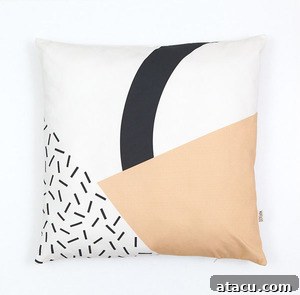
Above: A vibrant, Memphis-inspired cushion, artfully designed by the talented Etsy seller Depeapa. Its geometric patterns and contrasting colors embody the playful spirit of the era, making it a perfect accent for modern interiors.
The Curve Chair by Wrong for Hay features a distinctive textile design by Nathalie Du Pasquier, one of the original founding members of the Memphis group. This collaboration brilliantly bridges the past and present, showcasing Du Pasquier’s enduring influence and the timeless appeal of her graphic work.
A striking geometric Memphis-style table, crafted by the Adelaide-based husband and wife design duo Daniel Emma. Their work often reflects a minimalist approach with unexpected color pops and forms, here clearly referencing the bold structural and chromatic statements of Memphis.
Darkroom’s influential So Sottsass exhibition, which perfectly captured the essence of Sottsass’s pioneering vision through contemporary interpretations of tribal prints and vivid color combinations, further cementing Memphis Milano’s ongoing cultural relevance.
An exquisitely designed drinks cabinet by the Johannesburg-based husband and wife design team Dokter and Misses. Their piece exemplifies a sophisticated take on Memphis elements, combining bold geometry with rich materials, proving that the movement’s aesthetic can be both fun and luxurious.
A captivating table by Konstfack Collective, which was notably exhibited at the prestigious Stockholm Furniture and Light Fair. This piece showcases how the Memphis ethos of unconventional forms and vibrant interactions can translate into functional yet artistic furniture.
Threshold bookends by Brendan Timmins, a Philadelphia-based designer who has skillfully created a number of Memphis-inspired pieces. His bookends demonstrate how everyday objects can be transformed into sculptural statements through the application of bold colors, layered forms, and an eye for playful composition.
From cushions to furniture, the vibrant and revolutionary spirit of Memphis Milano continues to reverberate, inspiring a new generation of designers to embrace color, pattern, and personality in their creations. What began as a defiant rejection of prevailing norms has evolved into a celebrated icon, a testament to the enduring power of design to challenge, delight, and continually redefine our visual world.