
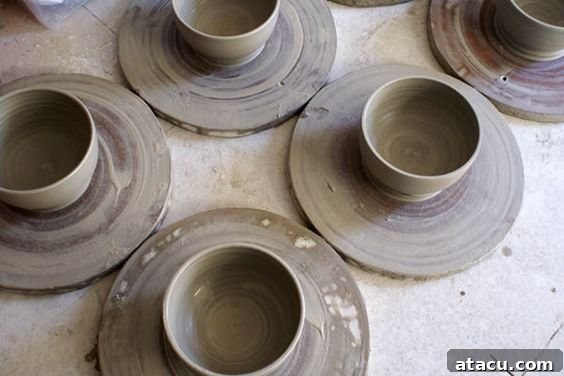
Unearthing Timeless Beauty: The Craft of Little Wren Pottery by Victoria Baker
In the vibrant coastal city of Sunderland, nestled in the historic North East of England, a captivating ceramics studio thrives under the charming name of Little Wren Pottery. Here, artist Victoria Baker breathes life into clay, crafting exquisite handmade rustic stoneware that masterfully blends deep-rooted tradition with contemporary appeal. Each piece, lovingly created, tells a story of heritage and skill, making it a perfect addition to any modern home seeking character and warmth. Victoria’s creations are readily available to a global audience through her popular Etsy shop, offering unique, artisanal items that stand apart in an age of mass production.
Beyond the tactile beauty of her stoneware, Victoria offers a glimpse into her creative world through her delightful blog. It’s a treasure trove of stunning imagery, showcasing her serene studio space and providing invaluable insights into the meticulous processes that define her craft. We recently had the pleasure of sitting down with Victoria to delve deeper into her artistic journey, her inspirations, and what truly makes Little Wren Pottery a special endeavor.
A Legacy Forged in Clay: Victoria Baker’s Creative Journey
“My academic path at the University of Dundee initially steered me towards design, rather than pottery,” Victoria shares, explaining her foundational approach. “This background instilled in me a constant drive to consider not just the primary function of each piece, but also its aesthetic contribution to daily living. It wasn’t until 2008 that I truly began my journey into pottery, and virtually everything I know was lovingly passed down to me by my Dad.”
Victoria’s connection to pottery runs deeper than personal passion; it’s intricately woven into the fabric of her hometown. “Sunderland boasts an incredibly rich history in ceramics,” she continues with pride. “In my own small way, I feel a profound sense of purpose in continuing this cherished tradition. It’s more than just making pots; it’s about honouring a legacy and ensuring these skills endure for future generations.” This dedication to heritage, combined with her designer’s eye, results in stoneware that is both exquisitely crafted and thoughtfully designed for everyday use.
Sunderland’s Rich Ceramic Heritage: Echoes in Modern Stoneware
Victoria’s dedication to preserving local heritage is deeply rooted in Sunderland’s industrial past. She elaborates on how her city’s vibrant history and family traditions continue to shape her unique work:
“Sunderland, particularly along the River Wear, was once a thriving hub for pottery. At its peak, there were as many as 25 potteries lining the riverbanks. The city became especially renowned for its ‘lustreware’ – a distinctive type of pottery characterized by its captivating pink iridescent sheen, often adorned with images of boats and local landmarks. This prominence in pottery was no accident; Sunderland offered an abundance of two vital raw materials: high-quality clay and coal, essential for firing the kilns.”
While Victoria acknowledges her apprenticeship to her father, she thoughtfully reflects on its broader impact: “Although my Dad’s passion for pottery undoubtedly provided the foundation for my skills, I don’t believe it singularly dictated my life’s path. However, I absolutely believe that our family’s creative legacy informs and enriches my future. For instance, my great-grandfather was a glassblower at the Pyrex factory, also located in Sunderland. As a skilled maker, he didn’t necessarily leave behind a ‘signature’ piece, but I would have loved to witness him at work, understanding the dedication behind his craft.”
The Allure of the Unexpected: Sunderland Frog Mugs
Victoria often infuses subtle, heartfelt tributes to this rich past into her contemporary pieces. “You’ll definitely see small nods to history in my pots,” she explains, “most notably in the Sunderland Frog Mugs. These were directly inspired by similar novelty mugs produced on Wearside back in the 1800s. Each of my Frog Mugs features a tiny, charming frog nestled inside, designed to give the drinker a delightful surprise!” This blend of historical charm and playful innovation truly encapsulates the spirit of Little Wren Pottery, making each item not just a functional object, but a piece of local storytelling.
Nurturing Growth: The Future of British Ceramics
The UK ceramics industry has faced significant challenges in recent years, with many venerable pottery companies either closing their doors or relocating production overseas. Victoria offers her perspective on whether she sees signs of revival, particularly from surviving heritage brands and independent designer-makers like herself who leverage platforms like Etsy:
“I believe British manufacturing as a whole has endured considerable hardship over the past few years. However, I am optimistic that people are increasingly recognizing the immense benefits of supporting local businesses and shopping closer to home. It’s a complex issue, but the advantages ripple throughout the entire supply chain, generating jobs, circulating money within local economies, fostering creativity, and providing numerous other positive impacts.”
Beyond economic considerations, Victoria highlights a critical cultural aspect: “There’s also a worrying loss of traditional skills, especially within ceramics. As older, experienced potters retire, their invaluable knowledge and techniques risk being lost forever. Keeping these traditional skills alive isn’t just about preserving a craft; it’s about safeguarding a vital part of our cultural heritage.”
She emphasizes the unique connection fostered by handmade items: “It’s genuinely rewarding to know the individual who crafted the item you’re buying, whether it’s a mug or a piece of jewellery. And of course, the inherent beauty of handmade goods lies in their individuality – every single piece is unique; no two will ever be exactly alike. This personal touch and the assurance of acquiring a truly one-of-a-kind item is a powerful draw for consumers today.” This renewed appreciation for authenticity and craftsmanship suggests a promising resurgence for the British ceramics industry, led by dedicated artisans like Victoria.
The Essence of Little Wren Pottery: Style and Inspiration
Defining a Style: Traditional, Rustic, Functional
When asked to distill her aesthetic into just three words, Victoria thoughtfully offers: “Traditional, rustic, functional.” These words are not merely descriptors but foundational pillars of her artistic philosophy.
- Traditional: This speaks to her deep respect for historical pottery techniques and designs, drawing inspiration from time-honoured methods passed down through generations. It’s about crafting pieces that feel familiar, enduring, and connected to a rich past.
- Rustic: This encapsulates the earthy, natural, and unpretentious character of her stoneware. It celebrates the imperfections inherent in handmade items, the warmth of natural glazes, and a connection to the natural world. Her pieces evoke a sense of comfort and authenticity.
- Functional: Emphasising her design background, functionality is paramount. Each piece is not just an object of beauty but is thoughtfully created to serve a purpose in daily life, enhancing everyday rituals with its presence and utility.
A Favorite Piece: The Humble Yet Cherished Jars
Pondering her favourite creation currently available in her Etsy shop, Victoria smiles, “It has to be the set of tea, coffee, and sugar jars. I confess, I’m often tempted to just keep them for myself!” She adds with a touch of humour, “Though I don’t drink coffee and don’t use sugar, so they might just become tea, tea, and tea jars in my own home!” This anecdote perfectly highlights the personal connection she has with her creations, and the functional beauty she strives to achieve.
Drawing from Nature and Masters: Victoria’s Inspirations
Victoria’s inspirations are as diverse as they are deeply personal. “I was born and raised in Yorkshire, despite my family’s Sunderland roots,” she recounts. “A significant portion of my childhood memories revolve around the creatures and rolling fields of that beautiful region. I also adore autumn, and I believe much of that appreciation manifests in my glaze colour palette – those rich greens subtly transitioning into golden browns, mirroring nature’s exquisite seasonal shift.”
Beyond natural landscapes, fellow potters significantly influence her work. “Of course, I’m also inspired by other ceramic artists,” she states, “and I think my absolute favourite has to be Michael Cardew. I deeply admire his masterful fusion of function and tradition. There’s an undeniable ‘Britishness’ to his work, a timeless, rustic character that resonates with me profoundly. To me, each of his pieces truly exudes his individual character, rather than chasing fleeting fashion trends. They possess an enduring charm.”
The Quiet Joy of Creation
When asked about the most rewarding aspect of her craft, Victoria’s answer is immediate and heartfelt: “I think the best times are always when it’s just me and the clay. I absolutely cherish those quiet moments in the studio. Our lives are often so frenetic and busy, but pottery truly compels you to slow down, and it rewards you immensely for doing so. It’s a feeling that’s difficult to articulate, but I discover something profoundly ‘golden’ in these tranquil, focused moments of creation.” This reflection beautifully captures the meditative and deeply personal nature of her work, highlighting the solace and satisfaction found in the meticulous process of shaping clay.
Beyond the Wheel: A Glimpse into Victoria’s World
Finding Happiness in Simple Pleasures
Victoria’s idea of happiness is beautifully uncomplicated: “I cherish those moments shared with family and friends. A sunny walk in the park, especially watching the squirrels play, paired with a perfectly brewed cup of tea – that’s my definition of happiness.” These simple joys clearly feed into the grounded, authentic feel of her pottery.
An Indispensable Tool: The Throwing Ribs
Every craftsperson has a tool they can’t live without, and for Victoria, it’s a specific item for her wheel: “Probably my throwing ribs. As a potter, I have relatively small hands, and throwing ribs are absolutely essential. They provide that crucial extra surface area needed to effectively shape and control larger pieces of clay on the wheel, allowing me to create the robust and beautifully formed pieces I strive for.” This detail offers a practical insight into the physicality and skill involved in her craft.
Victoria Baker’s Little Wren Pottery is more than just a studio; it’s a testament to enduring tradition, personal passion, and the quiet beauty of handmade art. Her work encapsulates the spirit of Sunderland’s rich heritage while offering contemporary homes a touch of rustic elegance. Each piece from Little Wren Pottery is an invitation to slow down, appreciate craftsmanship, and connect with the story of a dedicated artisan keeping a cherished skill alive.
Discover more about Victoria Baker and her exquisite work:
www.littlewrenpottery.co.uk
Etsy Shop
Images: Courtesy of Victoria Baker.