
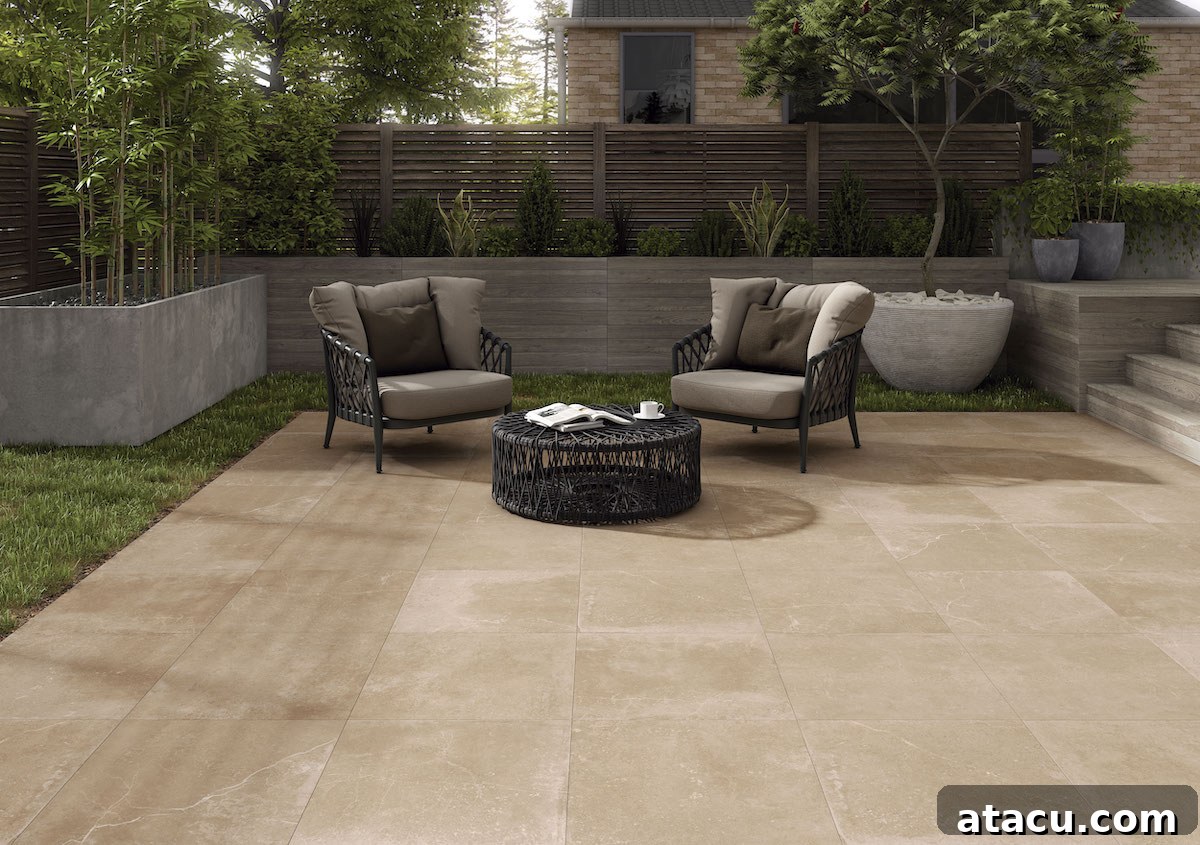
As the vibrant hues of spring emerge and the days grow invitingly longer, our thoughts naturally drift towards outdoor living. For those fortunate enough to have a beautiful patio graced with porcelain tiles, this transitional period is the opportune moment to prepare them for the season ahead. Proper care ensures your outdoor sanctuary remains stunning, resilient, and ready for countless hours of enjoyment.
“Maintaining the pristine appearance of your porcelain patio tiles is far simpler than many imagine,” explains Abbas Youssefi, Managing Director of Porcelain Superstore. “Porcelain is renowned for its exceptional durability and minimal maintenance requirements, making it an ideal choice for any outdoor space that faces the elements.”
Understanding the most effective ways to clean outdoor porcelain tiles is key not only to their aesthetic appeal but also to extending their lifespan. With a few straightforward tips and the right approach, you can keep your patio looking immaculate and inviting throughout the year. This comprehensive guide will walk you through everything you need to know, from essential tools to advanced cleaning techniques, ensuring your porcelain patio radiates cleanliness and charm.
Essential Tools for Cleaning Outdoor Porcelain Tiles
Before you embark on your cleaning mission, gathering the right supplies will make the process efficient and effective. Here’s a detailed checklist of what you’ll need, along with insights into why each item is crucial for achieving a sparkling porcelain patio:
- A Broom or Leaf Blower: Essential for initial debris removal. A stiff-bristled broom is excellent for dislodging dry dirt and leaves, while a leaf blower saves time on larger patios.
- A Bucket of Warm Water: Warm water helps dissolve dirt and grime more effectively than cold water, enhancing the cleaning power of your detergent.
- Mild Detergent or a pH-Neutral Cleaner: This is arguably the most important item. Specifically formulated pH-neutral cleaners are gentle on porcelain’s surface and grout, preventing damage or etching that harsh chemicals can cause. A small amount of dish soap can also work as a mild detergent.
- A Soft-Bristle Brush or Mop: A soft-bristle deck brush is ideal for scrubbing the tile surface without causing scratches. For larger areas or less aggressive cleaning, a sturdy mop can be sufficient. Avoid metal or abrasive brushes that could mar the tile.
- A Garden Hose (or a Pressure Washer on a Low Setting): A garden hose is perfect for rinsing away cleaning solutions and loosened dirt. If opting for a pressure washer, extreme caution is advised; use a wide fan nozzle and maintain a low-pressure setting to protect both the tiles and, critically, the grout lines.
- White Vinegar (Optional, for Specific Stains): A natural and effective solution for tackling mildew, hard water spots, or certain organic stains. However, it should be used diluted and with care, especially on unglazed porcelain or delicate grout.
- Microfiber Cloths: Excellent for drying and buffing tiles to a streak-free, gleaming finish, preventing water spots and enhancing natural shine.
- Protective Gloves: Always a good idea when working with cleaning solutions, even mild ones, to protect your hands.
The Comprehensive Step-by-Step Porcelain Tile Cleaning Process
Follow these steps diligently to ensure a thorough and safe clean for your outdoor porcelain tiles, transforming your patio into a pristine retreat.
1. Clear and Prepare the Surface: Sweep or Blow Away Debris
The first and fundamental step is to remove all loose debris from your patio. Accumulations of leaves, twigs, dust, and general garden litter can become abrasive when wet, potentially scratching the tiles during scrubbing. For smaller patios, a sturdy broom is effective. For larger areas, a leaf blower can significantly speed up this process. Ensure the surface is as clear as possible before introducing any liquids. This initial dry clean sets the stage for a much more effective deep clean.
2. Prepare Your Gentle Cleaning Solution
Porcelain tiles are incredibly durable, but their beauty can be compromised by harsh chemicals. For general cleaning, a few drops of mild dish detergent or, even better, a specially formulated pH-neutral cleaner mixed into a bucket of warm water will suffice. The warm water helps to activate the cleaning agents and loosen grime more effectively. Avoid bleach, ammonia-based cleaners, or acidic solutions (unless specified for a particular stain and diluted carefully, as with vinegar), as these can damage the tile’s glaze or erode grout over time.
3. Scrub Gently but Thoroughly to Lift Grime
Once your cleaning solution is ready, apply it evenly across a manageable section of your patio. Using a soft-bristle brush or mop, work the solution into the tiles. Pay particular attention to areas where dirt tends to accumulate, such as corners, edges, and grout lines, or spots with visible stains. The key is gentle but consistent scrubbing; the soft bristles are designed to lift dirt and grime without scratching the impervious surface of the porcelain. Allow the solution to sit for a few minutes on stubborn areas to break down dirt, but don’t let it dry on the tiles.
4. Rinse Well to Remove All Residue
After scrubbing, a thorough rinse is crucial to remove all traces of the cleaning solution and the loosened dirt. Use a garden hose with a standard nozzle to wash away the suds and grime. Work from one end of the patio to the other, ensuring all dirty water is flushed off the surface. If you opt to use a pressure washer, exercise extreme caution. Set it to the lowest effective pressure and use a wide fan nozzle. Hold the nozzle at a safe distance from the tiles (typically at least 12-18 inches) and move it steadily. High pressure can damage the grout, potentially leading to costly repairs or water ingress issues. If you have any doubts, a garden hose is always the safer choice.
5. Optional: Dry for a Spotless, Polished Finish
For an exceptionally spotless and gleaming finish, consider this optional final step. After rinsing, use clean microfiber cloths or a dry mop to wipe down the tiles. This helps to prevent water spots, streaks, and mineral deposits, especially if you live in an area with hard water. Buffing the tiles with a dry microfiber cloth will also enhance their natural luster, leaving your patio looking professionally cleaned and polished. This step is particularly effective for achieving that “brand new” look.
Targeted Cleaning: Utilizing White Vinegar for Specific Stains
White vinegar is a remarkably versatile and natural cleaning agent, particularly effective against certain types of outdoor stains. Its mild acidity can cut through mildew, hard water spots, and some organic discolorations. To use it, mix one part white vinegar with four parts water in a spray bottle or bucket. Apply the solution directly to the stained area, let it sit for 10-15 minutes, then scrub with a soft brush and rinse thoroughly. However, a word of caution: if your porcelain tiles are unglazed, or if your grout is particularly sensitive, it’s advisable to test the vinegar solution in an inconspicuous area first, as its acidic nature could potentially be too strong for certain surfaces. For general cleaning, stick to pH-neutral solutions.
Common Questions About Cleaning Outdoor Porcelain Tiles Answered
Addressing frequent queries helps clarify the best practices for porcelain patio maintenance.
What is the best thing to clean outdoor porcelain tiles with?
For routine cleaning, the best solution is a mild detergent or a dedicated pH-neutral outdoor tile cleaner mixed with warm water. These cleaners are specifically designed to be tough on dirt and grime but gentle on the porcelain surface and grout, ensuring no damage occurs. Avoid abrasive powders or highly acidic/alkaline cleaners, which can dull the finish or etch the tiles over time.
Can you jet wash outdoor porcelain tiles?
Yes, you can jet wash outdoor porcelain tiles, but extreme caution is paramount. Always use a pressure washer on a low setting (ideally below 1500 PSI) and equip it with a wide fan nozzle. Maintain a significant distance (at least 12-18 inches) from the tile surface. The primary concern with high-pressure washing is potential damage to the grout lines, which are often softer than the porcelain itself. High pressure can blast away grout, leading to water penetration and structural issues. If you are unsure, a simple garden hose is always the safest and often sufficiently effective alternative.
How do you make porcelain tiles shine again?
To restore and enhance the natural shine of your porcelain tiles, start with a thorough clean using a pH-neutral cleaner. After rinsing all cleaning solution, the critical step is to dry and buff the tiles with a clean, dry microfiber cloth. This action removes any residual water spots or film, allowing the tile’s inherent luster to come through. For an extra boost, some porcelain-specific cleaners contain ingredients that help revitalize shine. Regular cleaning and immediate drying after spills or rain will help maintain this gleam.
How often should you clean your porcelain patio tiles?
The frequency of cleaning depends on several factors, including local weather conditions, the amount of foot traffic, and the proximity of trees or plants. As a general guideline, a monthly light clean is beneficial for maintaining appearance and preventing dirt buildup. However, after periods of heavy rain, strong winds, or during leaf-shedding seasons, you may want to clean more frequently. A deep clean at the beginning of spring and another at the end of autumn will help prepare your patio for seasonal changes.
How do you clean grout between porcelain tiles outdoors?
Cleaning grout requires a slightly more targeted approach. For light stains, your general pH-neutral cleaning solution and a stiff-bristle grout brush (a toothbrush can work for small areas) will be effective. For tougher grout stains, a paste made from baking soda and water applied directly to the grout, left for 15-20 minutes, then scrubbed and rinsed, can work wonders. For mold or mildew, a diluted white vinegar solution can be effective, but always test it first. Avoid harsh abrasive cleaners or wire brushes, as these can damage the grout or surrounding tiles.
Extra Tips for Long-Term Porcelain Patio Maintenance and Protection
Beyond regular cleaning, a few proactive measures can ensure your porcelain patio remains in pristine condition for years to come.
- Consider Sealing Grout Lines: While porcelain tiles are non-porous and don’t typically require sealing, the grout lines between them often do. Sealing the grout can create a protective barrier against moisture, stains, and mildew, making future cleaning much easier and preventing discoloration.
- Avoid Harsh Tools and Abrasives: Always stick with soft-bristle brushes, mops, and microfiber cloths. Metal brushes, scouring pads, or abrasive cleaning powders can scratch the surface of your porcelain tiles, compromising their appearance and protective glaze.
- Protect Against Furniture Scratches: Place protective pads or caps under the legs of patio furniture. Regularly check these pads for wear and tear, replacing them as needed, to prevent scratches and scuffs from being dragged across the tiles.
- Use Outdoor Rugs in High-Traffic Areas: Strategically placed outdoor rugs can protect your porcelain tiles from excessive wear, spills, and impact in areas with heavy foot traffic or where dining occurs.
- Address Spills Promptly: Porcelain is highly stain-resistant, but immediate cleanup of spills (especially grease, oil, or highly pigmented liquids like red wine) is always the best defense. The longer a spill sits, the harder it might be to remove, even from porcelain.
- Regular Dry Sweeping: Incorporate daily or weekly dry sweeping into your routine. This prevents loose dirt, sand, and leaves from accumulating and being ground into the surface by foot traffic, reducing the need for intensive wet cleaning.
Ultimately, knowing how to clean outdoor porcelain tiles is all about consistent, gentle care and employing the right techniques. A little effort now, particularly as the seasons change, will ensure your patio remains in tip-top condition, providing a beautiful and inviting extension of your home all summer long and beyond. Enjoy your refreshed and gleaming outdoor living space to the fullest!
Now that your porcelain tiles are refreshed and gleaming, why not complete the transformation of your outdoor space? Explore 10 of the best garden sofa sets to create an effortlessly inviting and comfortable haven.