

Down vs. Feather: The Ultimate Guide to Choosing Your Perfect Duvet and Pillow
In the quest for ultimate sleep comfort, the bedding choices we make play a pivotal role. It’s all too easy to be swayed by lavish marketing claims and the initial soft touch of a duvet or pillow. However, truly understanding what lies beneath the fabric — specifically, whether it’s down or feather — is crucial for investing in bedding that genuinely enhances your sleep, night after night.
The distinction between down and feather is far more than a mere technicality; it directly impacts your warmth, support, breathability, and overall sleep quality. This comprehensive guide will meticulously break down the facts, allowing you to make an informed decision about whether a down duvet, feather pillow, or a blend of both is the ideal choice for your personal comfort and sleeping habits.
We’ll delve into the unique characteristics of each material, their respective pros and cons, and how they perform in various scenarios, from providing relief for back pain to offering optimal warmth in different climates. By the end, you’ll be equipped with the knowledge to invest wisely in bedding that promises truly restorative sleep.Unpacking the Difference: Down vs. Feather

While often used interchangeably, down and feathers are distinct natural materials, each with unique properties that influence their performance in bedding. Understanding these fundamental differences is key to appreciating why they offer such varied sleep experiences.
As Nils Stene, CEO of luxury bedding brand Norvegr, explains, “Feathers constitute the rigid outer plumage found on ducks and geese. Each individual feather is characterized by a flat, two-dimensional structure with a central quill shaft. This flat shape means feathers are not adept at trapping air efficiently, resulting in minimal insulation value. In pillows, the primary function of feathers is to provide significant bulk and firm support. When incorporated into duvets, an excessive proportion of feathers can actually diminish the overall quality of the product due to their weight and lower insulating capabilities.”
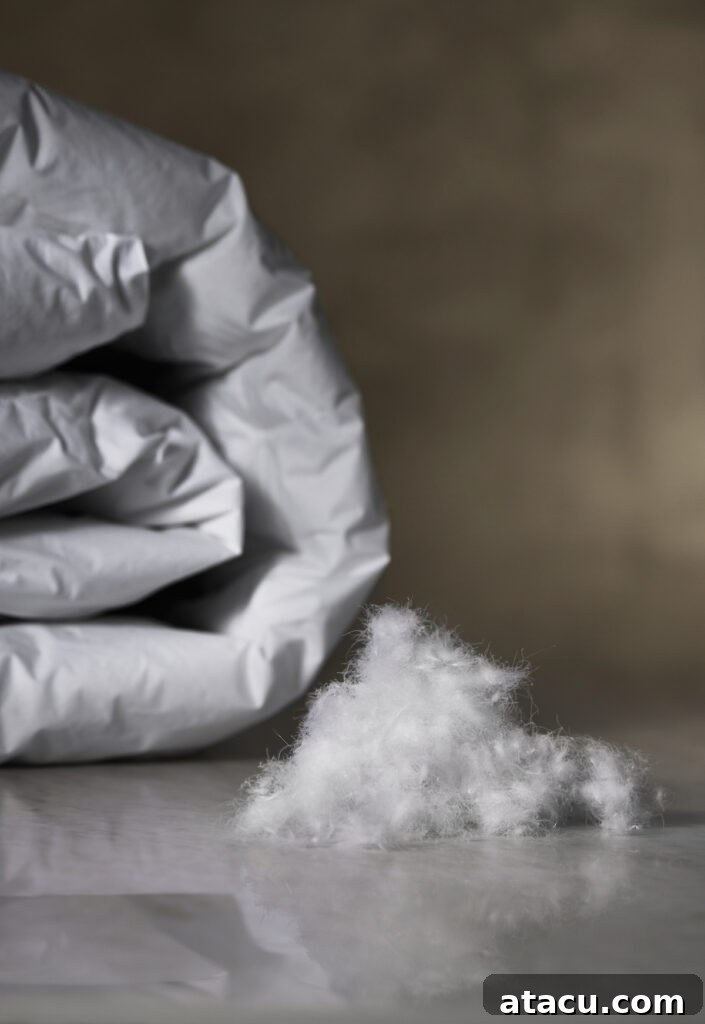
In stark contrast, “Down represents the soft, fluffy undercoat situated beneath the birds’ coarser outer feathers, predominantly found on the belly and breast areas. It comprises intricate clusters of light, buoyant filaments that radiate outwards from a tiny, imperceptible central quill point, entirely lacking a rigid shaft. This quill-less structure accounts for its inherently soft and pliable nature.”
The true magic of down lies in its three-dimensional structure. “Each down cluster excels at providing exceptional warmth and insulation by creating thousands of minuscule, interconnected air pockets within its intricate filaments. These air pockets effectively trap body heat, forming an insulating barrier. Concurrently, down possesses remarkable breathability, allowing moisture and water vapor to escape from the bird’s body, which translates to a dry and comfortable sleeping environment for humans.” This unparalleled combination of warmth, lightness, and breathability makes down an exquisite and highly sought-after material for luxury duvets and pillows.
Down vs. Feather Pillows: Finding Your Ideal Support and Softness
The choice between a down or feather pillow significantly impacts head and neck support, crucial for spinal alignment and preventing discomfort. Your preferred sleeping position is often the best guide.
Down pillows are renowned for their exceptional softness, lightness, and ability to mold intimately to the contours of your head and neck, offering that coveted ‘sink-in’ sensation. They are incredibly breathable, preventing heat buildup and promoting a cool sleep surface. This plush, adaptable quality makes them an ideal choice for stomach sleepers, who need a low-loft pillow to maintain neutral spinal alignment, and often for back sleepers who require gentle cushioning without excessive elevation.
Feather pillows, conversely, offer a noticeably firmer and more substantial feel. Their inherent weight and the rigidity of the feather quills provide more defined and resilient support. This makes them particularly well-suited for side sleepers, who require a higher loft and robust support to bridge the gap between their head and shoulder, ensuring proper neck and spinal alignment. While very supportive, feathers can shift and compress over time, necessitating regular fluffing to restore their shape and loft.
Expert Tip for Longevity and Comfort: To significantly extend the lifespan of your pillow, regardless of its fill, and to prevent any stray feather quills from poking through the fabric, always utilize a high-quality, tightly woven pillow protector. These protectors add an extra layer of defense against dust mites, allergens, and general wear and tear, ensuring your pillow remains fresh and comfortable for years.
Down vs. Feather Duvets: The Science of Warmth Without Weight
When it comes to duvets, the choice between down and feather largely boils down to your desired level of warmth, weight, and luxurious feel.
Down-filled duvets are celebrated for offering unparalleled lightness combined with exceptional warmth. The unique structure of down clusters allows them to trap a remarkable volume of air relative to their weight, creating superior insulation without feeling heavy or oppressive. This outstanding warmth-to-weight ratio is why down is often considered the gold standard for luxury bedding. Furthermore, down’s natural temperature-regulating properties—its ability to breathe and wick away moisture—make it an excellent choice for an all-season duvet, keeping you warm in winter and preventing overheating in warmer months. The insulating capacity of a down duvet is often measured by its “fill power,” which indicates the volume (in cubic inches) that one ounce of down occupies. A higher fill power (e.g., 600-800+) signifies greater loft, better insulation, and lighter weight.
Feather duvets, while more economical, tend to be significantly heavier and offer less insulating power compared to down. The flat structure of feathers means they cannot trap air as effectively, resulting in a heavier duvet that doesn’t provide the same level of warmth per ounce. They are a good option if you appreciate a heavier feel to your bedding, which some individuals find comforting, or if you reside in a warmer climate where extreme insulation is not required.
For many, a down and feather blend duvet presents an attractive compromise, balancing the softness and warmth of down with the supportive bulk and cost-effectiveness of feathers. Common blends, such as 50/50 or 70/30 (down/feather), can offer a harmonious combination of attributes, providing a bit of weight with decent insulation and a more accessible price point.
Comprehensive Pros and Cons: A Detailed Comparison
To aid your decision-making, here’s an expanded look at the advantages and disadvantages of both down and feather fills:
Down Bedding
Pros:
- Ultra-light and Lofty: Down clusters are incredibly lightweight yet expand to create significant volume, offering a luxurious, cloud-like feel that drapes beautifully over the body without feeling heavy.
- Excellent Insulation: The intricate, three-dimensional structure of down traps thousands of tiny air pockets, providing superior warmth for its weight. This exceptional thermal efficiency makes down ideal for keeping you cozy in colder temperatures.
- Naturally Breathable: Down naturally allows air to circulate and moisture to escape, preventing the clammy sensation often associated with synthetic fills. This breathability helps regulate body temperature, promoting a comfortable sleep environment in various climates.
- Long-lasting with Proper Care: High-quality down, when properly maintained with regular fluffing and professional cleaning, can last for many years, often exceeding a decade, making it a durable investment.
- Exceptional Softness: The absence of rigid quills ensures a supremely soft and pliable texture, conforming perfectly to the body’s contours for ultimate comfort.
Cons:
- More Expensive: Due to the limited supply, labor-intensive collection, and specialized processing required, down is significantly more costly than feather, particularly premium varieties like goose or Eider down.
- Can Flatten Over Time: Without regular fluffing and occasional airing, down can compress and lose some of its loft over time, reducing its insulating power and plush feel.
- Not Always Hypoallergenic: While down itself is not typically an allergen, dust and impurities present in poorly processed down can trigger allergic reactions. Always look for down that has been thoroughly cleaned, washed, and certified (e.g., Oeko-Tex Standard 100).
- Requires Specific Care: Down products usually necessitate professional dry cleaning or careful washing according to manufacturer instructions, which can be more involved than caring for synthetic alternatives.
Feather Bedding
Pros:
- Provides Firm Support: The inherent structure of feather quills offers a firmer, more resilient support, making feather pillows an excellent choice for those who need more defined head and neck elevation, such as side sleepers.
- Budget-Friendly: Feathers are more abundant and less complex to process than down, resulting in a more accessible and economical price point, making them a good option for those on a tighter budget.
- Heavier, Which Some Find Comforting: Many individuals appreciate the substantial weight of a feather duvet or the denser feel of a feather pillow, finding the added pressure reassuring and comforting (akin to deep pressure stimulation).
- Durable Structure: The rigid quills contribute to the structural integrity of the bedding, providing a robust feel that holds its shape well under pressure, though it still requires fluffing.
Cons:
- Less Insulating: Due to their flat, two-dimensional structure, feathers are less efficient at trapping air compared to down. This means feather duvets are generally less warm for their weight and may feel bulkier to achieve similar warmth levels.
- Can Be Noisy or Poke Through Fabric: The rigid quills of feathers can produce a rustling sound with movement, which might disturb light sleepers. Additionally, lower-quality feather products or thin fabric casings may allow quills to poke through, causing discomfort.
- Requires Regular Fluffing: Feathers tend to shift and compress more readily than down, requiring more frequent and vigorous fluffing to maintain loft, even distribution, and prevent flat spots.
- Heavier Weight: While a pro for some, the added weight can be a con for others who prefer lightweight bedding that allows for easier movement during sleep.
Best Option for Back Pain: Prioritizing Spinal Alignment
When dealing with back or neck pain, the primary goal of your pillow and duvet is to promote optimal spinal alignment and minimize pressure points. The choice between down and feather here is nuanced.
Feather pillows, with their inherent firmness and robust resistance, can be highly beneficial for individuals seeking strong support for spinal alignment. They excel at maintaining a consistent loft, which is crucial for side sleepers needing to keep their head and neck level with their spine. The firm nature helps prevent the head from sinking too deeply, which can strain the neck and exacerbate back issues.
However, if you prefer a softer feel or find very firm pillows uncomfortable, a high-fill power down pillow may still provide adequate support while offering a gentler touch. The superior moldability of down allows it to conform closely to the unique curve of your neck, distributing pressure evenly and alleviating strain on sensitive areas. For back sleepers, a medium-loft down pillow can provide sufficient cushioning without pushing the head too far forward.
Ultimately, the best approach often involves a holistic consideration of your entire sleep setup. Combining a supportive mattress and, if needed, a specialized mattress topper with the right pillow, chosen according to your sleeping position and specific pain points, usually yields the most effective results for back and neck pain relief. It’s also worth exploring pillows designed with chamber constructions that combine a feather core for support with a soft down exterior for comfort.
Cost Comparison: Understanding the Investment
The price tag is often a significant factor in bedding decisions, and here, down and feather diverge quite distinctly.
Down is considerably more costly than feather, a difference that reflects its superior performance, rarity, and the more intricate processes involved in its collection and cleaning. Premium goose down, and especially Eider down (known for its exceptional warmth and rarity), commands the highest prices. This premium is an investment in unparalleled softness, loft, insulation, and durability. While the initial outlay is higher, high-quality down bedding, with proper care, can last for 10-20 years, often making it a worthwhile long-term investment in sleep quality and comfort.
Conversely, feather bedding is much more accessible price-wise. Feathers are more readily available and less labor-intensive to process, making feather-filled duvets and pillows a more budget-friendly option. While they may lack the luxurious feel and high-performance insulation of top-tier down, feather products still offer a good level of support and comfort for their price. For those seeking basic comfort without a significant financial commitment, feather bedding provides a practical solution, though it may require replacement more frequently than quality down products.
Warmth & Weight: Which Material Keeps You Cozier?
When it comes to warmth, the efficiency of down is simply unmatched for its weight. Thanks to its unique, complex cluster structure, down excels at trapping vast quantities of air, forming an incredibly effective thermal barrier. This means that down is significantly warmer by weight than feather.
If your primary goal is to find winter-ready bedding that provides exceptional warmth without the cumbersome bulk, a high-fill power down duvet is the unequivocally superior choice. It offers a cozy, insulating embrace that feels light as air, allowing for unrestricted movement during sleep. Down duvets are often rated by TOG (Thermal Overall Grade), with higher TOG values indicating greater warmth. Down easily achieves very high TOG ratings while remaining relatively lightweight.
Feather duvets, on the other hand, tend to be notably heavier and are less effective at maintaining consistent warmth. Their flatter structure cannot trap air as efficiently, meaning a feather duvet needs to be much thicker and heavier to achieve a comparable level of warmth to a down duvet. This can sometimes lead to uneven warmth distribution and a heavier feeling that some sleepers might find restrictive. While they can provide warmth, they don’t offer the same thermal efficiency or lightweight luxury as down.
Softness & Fluffiness: The Indulgent Comfort Factor
For those who dream of sinking into a bed that feels like a cloud, the choice is clear: down reigns supreme in the realm of softness and fluffiness.
Down is inherently fluffier, more voluminous, and remarkably pliable. Its intricate, quill-free clusters create an extraordinary loft that translates into that distinctive plush, ethereal, and ‘cloud-like’ feel. When you lie on a down pillow or beneath a down duvet, it molds exquisitely to your body, enveloping you in gentle comfort without any sense of resistance. This unparalleled softness is often what people associate with luxury hotel bedding and truly indulgent sleep experiences.
In contrast, feather is denser and generally flatter. While it provides firm support, it simply cannot replicate the expansive fluffiness or the soft, yielding sensation of down. The presence of quills gives feather products a more structured and less ethereal feel. If supreme softness and a truly plush, sinking-in experience are your ultimate goals for sleep comfort, down will undoubtedly deliver a more satisfying and luxurious sensation.
Final Thoughts: Making Your Informed Bedding Choice
The decision between down and feather ultimately boils down to a balance of personal preference, desired comfort, support needs, and budget. Both materials offer distinct benefits, and understanding these differences will empower you to select the bedding that best aligns with your sleep style and aspirations.
- Choose down if your priority is maximum softness, lightweight warmth, superior breathability, and natural temperature regulation. Down provides that luxurious, cloud-like experience, exceptional insulation for all seasons, and remarkable longevity with proper care. It’s an investment in unparalleled sleep comfort.
- Choose feather if you prefer firm, robust support, a heavier feel in your bedding, and a more budget-friendly option. Feather pillows excel at providing structure, particularly for side sleepers, and feather duvets offer a comforting weight at a more accessible price point.
Still finding yourself torn between these excellent natural fills? Consider a down/feather blend. These blends are engineered to capture the best attributes of both materials, offering a balanced compromise between the plush softness of down and the supportive resilience of feathers. Ratios can vary, allowing you to fine-tune the feel to your liking. Additionally, if allergies are a significant concern or if you have ethical considerations regarding animal products, explore the wide array of high-quality down alternatives. Modern synthetic fills have come a long way, mimicking many of down’s qualities while offering hypoallergenic properties and ease of care.
Investing in the right duvet and pillow is an investment in your daily well-being. By making an informed choice between down and feather, you’re taking a significant step towards elevating your sleep quality and ensuring truly restorative rest.
Ready to elevate your sleep even further? Learn how to choose the right pillow for your specific sleep style and discover where to buy the best bed sheets for ultimate comfort and a truly luxurious sleeping experience.
Images courtesy of Norvegr.