
Unlock Better Sleep: Your Ultimate Guide to Choosing the Perfect Pillow
Have you ever truly considered the profound impact your pillow has on the quality of your sleep? For many, a pillow is simply an item on the bed, often an afterthought, relegated to a passive role in our nightly routine. However, its importance extends far beyond simple comfort. The right pillow is a cornerstone of restorative sleep, directly influencing your spinal alignment, muscle relaxation, and overall well-being when you wake. Surprisingly, the ideal pillow for you is largely determined by one crucial factor: your dominant sleeping position.
I must confess, for a significant part of my life, pillows were largely overlooked. They received an occasional wash and were replaced only when visibly decrepit, without much thought given to whether they were truly the right type of pillow for my specific needs. It wasn’t until I started collaborating with various bedding brands and experimenting with a wide array of options that my perspective shifted dramatically. Through this research and personal experience, I discovered that the support requirements for a side sleeper are vastly different from those needed by someone who primarily sleeps on their back or stomach. This revelation opened my eyes to the nuanced world of pillow selection, highlighting how a seemingly minor choice can have major repercussions on sleep quality.
Navigating the vast market of pillows can feel overwhelming. With countless types, materials, and firmness levels available, how do you discern which one is genuinely beneficial for your sleep health? This comprehensive guide aims to simplify that journey. I’ll delve into the various types of pillows available, sharing insights from my personal trials and extensive research. Beyond selection, I’ll also equip you with essential tips on how to properly care for your pillows, ensuring their longevity and maintaining their effectiveness. If you’re ready to elevate your sleep experience and invest in your nightly comfort, then read on – your perfect pillow awaits!

How to Choose Your Perfect Pillow: Key Considerations for Optimal Sleep
Selecting the ideal pillow involves more than just picking the prettiest one off the shelf. It requires a thoughtful assessment of several critical factors that impact both your comfort and spinal health. Addressing these points will guide you toward a pillow that truly supports your unique sleep needs:
1. Support Level: Supportive or Plush?
The first distinction you’ll encounter in your pillow search is between supportive and plush designs. A supportive pillow is meticulously engineered to maintain proper spinal alignment by filling the crucial gap between your head, neck, and mattress. It prevents your head from sinking too much or being propped up too high, both of which can lead to uncomfortable neck pain, stiffness, and even headaches. These pillows are generally firmer and more structured, offering consistent resistance.
Conversely, a plush pillow prioritizes softness and a cloud-like sensation. While it undoubtedly feels luxurious and inviting, a plush pillow might not offer adequate support for all sleeping positions, potentially compromising the vital alignment of your spine. It’s crucial to strike a balance between the desire for softness and the non-negotiable need for proper ergonomic support to avoid long-term discomfort.
2. Pillow Material: The Core of Comfort and Support
The filling material dictates much of a pillow’s feel, its level of support, and its overall longevity. Common options include natural fillings like down and feathers, or advanced synthetics such as memory foam, latex, and various polyester blends. Each material offers a unique set of benefits and drawbacks concerning firmness, breathability, durability, and hypoallergenic properties. We’ll explore these in greater detail later in this guide, helping you match material to your personal preferences.
3. Pillow Size: Matching Your Bed and Your Body
Pillows come in a range of sizes, from the universally common standard to the more expansive king, as well as specialized shapes like bolster or V-shaped. While standard and king sizes primarily serve to fit your bed dimensions and pillowcases, specialized sizes cater to specific support requirements. For instance, a V-shaped pillow can provide excellent back support for reading in bed, while a bolster pillow might offer additional leg support or decorative flair.
4. Your Budget: An Investment in Sleep Health
Pillows vary widely in price, typically ranging from affordable options around £20 to premium choices exceeding £100. While it might be tempting to opt for the cheapest available, remember that a good pillow is a critical investment in your health and daily energy levels. It’s wise to allocate a reasonable budget to find a comfortable, durable pillow that will genuinely enhance your sleep for years to come. Investing in quality often saves money in the long run by preventing frequent replacements and mitigating potential health issues caused by inadequate support.
Finding the Perfect Pillow to Suit Your Sleeping Position
Your preferred sleeping position is arguably the most critical factor in determining the right pillow for you. The overarching goal is always to maintain a neutral spinal alignment, from your head down to your tailbone. Misalignment can lead to a cascade of problems, including chronic neck pain, headaches, shoulder stiffness, and significantly disturbed sleep. Let’s break down the ideal pillow characteristics for each primary sleeping position, ensuring you wake up refreshed and pain-free:
Pillows for Side Sleepers: The Importance of Loft and Firmness
If you primarily sleep on your side, you need a pillow with substantial loft and firmness to bridge the considerable gap between your head and shoulder. This is absolutely crucial for keeping your neck aligned with the rest of your spine. Without adequate support, your head will drop towards the mattress, causing significant strain on your neck and upper back muscles, often resulting in stiffness and pain upon waking.
When selecting a pillow for side sleeping, look for:
- Firm to Medium-Firm Support: This is essential for preventing your head from sinking too far, ensuring consistent alignment throughout the night.
- Higher Loft: Typically ranging from 4 to 6 inches, the ideal loft depends on your individual shoulder width. A wider shoulder requires a higher loft.
- Contouring Materials: Materials like memory foam and firm latex are excellent choices, as they conform to the unique curves of your neck and head while offering robust, unwavering support.
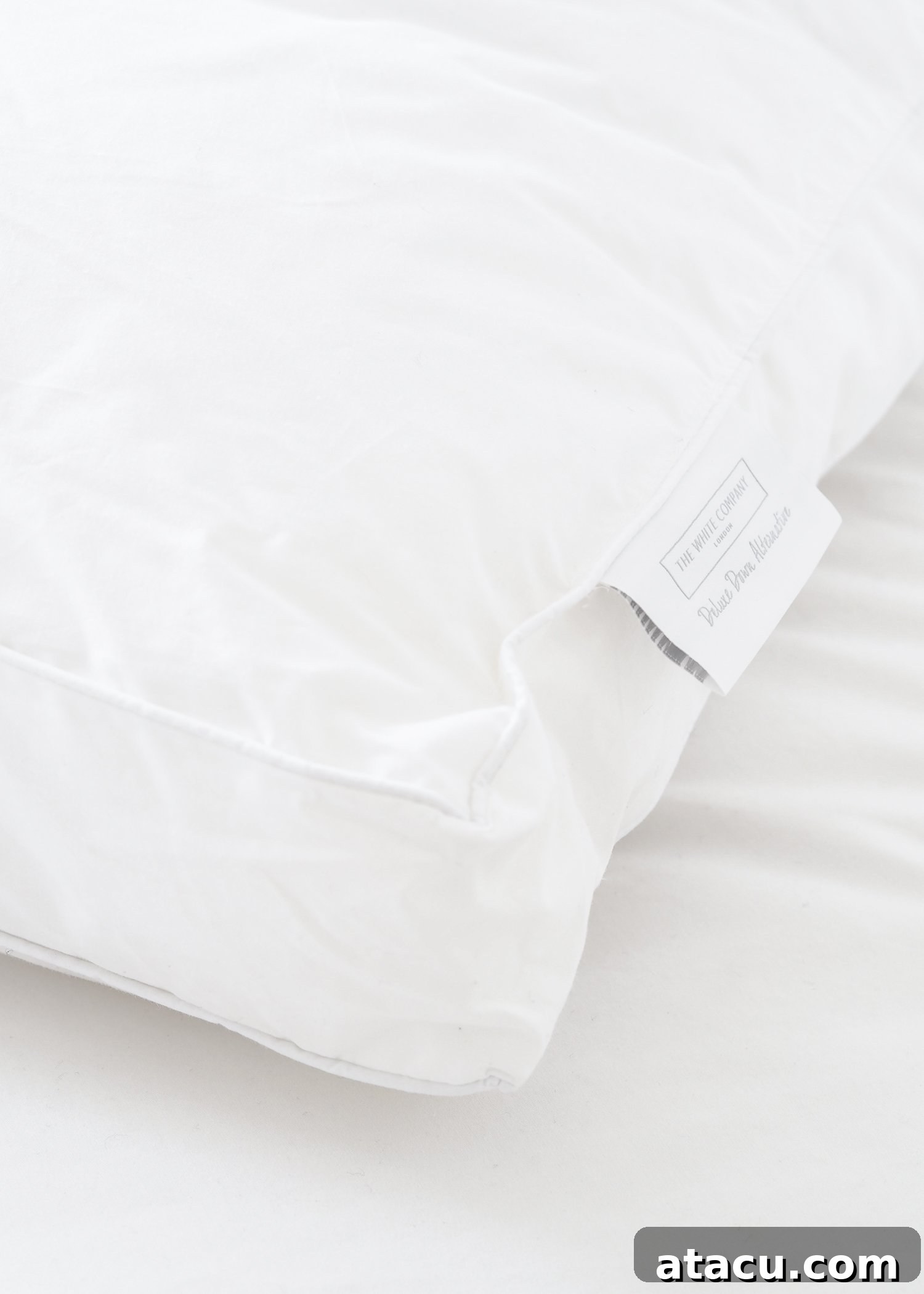
- Boxed Construction: As exemplified by options like a deluxe side support pillow, a boxed construction helps the pillow maintain its shape and loft, filling out the pillowcase nicely for a plump and inviting look, all while providing consistent edge-to-edge support that won’t collapse under pressure.
The White Company’s deluxe side support pillow, for instance, is often highly recommended for side sleepers due to its ability to offer an exceptional level of comfort and support, diligently working to ensure proper neck and spine alignment.
Pillows for Back Sleepers: Gentle Cradle, Balanced Support
Back sleepers require a pillow that gently cradles the natural curve of their neck without pushing the head too far forward or allowing it to fall back too much. The ideal pillow will absorb the weight of your head, keeping your neck and spine in a neutral, relaxed position that mirrors good standing posture.
When selecting a pillow for back sleeping, prioritize:
- Medium Support: The sweet spot – not too firm to jut your head forward, and not too soft to let it sink uncomfortably.
- Medium Loft: Lower than a side sleeper pillow, typically between 3 and 5 inches, to prevent your head from being propped up too high and creating an unnatural angle.
- Contoured or Ergonomic Designs: Some pillows are specifically designed with a slight dip for the head and a raised area for the neck, providing targeted support.
- Suitable Materials: Memory foam, buckwheat, or a medium-firm down/feather blend can work exceptionally well. The White Company’s medium memory microfibre pillow is a good example for back sleepers, offering balanced support without excessive elevation.
Pillows for Stomach Sleepers: Minimalist Comfort
Sleeping on your stomach is generally discouraged by most sleep experts as it frequently leads to neck strain due to the head being turned to one side for extended periods. However, if it’s your ingrained preferred position, the key is to minimize the angle of your neck as much as possible to reduce potential damage.
For stomach sleepers, look for:
- Very Soft Support: The pillow should offer minimal resistance.
- Low Loft: Often less than 3 inches, or even an exceptionally thin pillow. Many dedicated stomach sleepers even prefer no pillow at all, or strategically placing a flat pillow under their hips to improve overall spinal alignment and reduce lower back arching.
- Appropriate Materials: Soft down, thin synthetic fills, or even a soft, shredded memory foam pillow where you can easily remove filling to customize the loft. A soft support pillow, such as the White Company’s Soft and Light Breathable Pillow, is ideal for minimizing neck elevation and maintaining a flatter profile.
Pillows for Combination Sleepers: Adaptability is Key
If you find yourself frequently changing positions throughout the night – perhaps starting on your side and ending on your back – you’ll need a versatile pillow that can adapt to your movements. Adjustable pillows, often filled with shredded memory foam or buckwheat hulls, are excellent choices because they allow you to easily remove or add filling to customize the loft and firmness. Hybrid pillows, which combine different materials, can also offer a superb balance of support and adaptability, catering to multiple positions without compromise.

Choosing the Right Pillow Material for Your Comfort
Once you’ve identified the ideal support level and loft based on your sleeping position, the next critical step is to consider the pillow’s filling material. Each material offers distinct characteristics that can significantly impact your comfort, level of support, breathability, and even your long-term health. Understanding these differences is key to making an informed decision:
Memory Foam Pillows: Contouring Support
Memory foam is renowned for its unique ability to contour precisely to the shape of your head and neck, offering unparalleled pressure relief and firm, adaptive support. This material excels at cradling and stabilizing the head, making it an excellent choice for side and back sleepers who require consistent alignment and relief from pressure points.
Pros: Excellent individualized support and pressure relief, durable, ideal for pain sufferers, limits motion transfer.
Cons: Can retain body heat (though newer gels/perforated versions mitigate this), may have an initial off-gassing smell (which dissipates), can feel less responsive to movement (some describe it as feeling “stuck”). The TEMPUR Comfort Pillow Cloud, highly recommended by many, is a prime example of a shape-contouring memory foam pillow that adapts beautifully to provide firm support with added comfort.
Latex Pillows: Responsive and Hypoallergenic
Latex pillows offer a unique combination of resilient firmness, responsiveness, and impressive durability. Available in both natural and synthetic forms, latex provides a buoyant, supportive feel without the deep, slow contouring of memory foam. It’s naturally hypoallergenic, resistant to dust mites, and often cooler than memory foam, making it a stellar choice for allergy sufferers and those who sleep hot.
Pros: Excellent consistent support, highly durable and long-lasting, naturally cooling (especially aerated latex), naturally hypoallergenic and antimicrobial, very responsive to movement.
Cons: Can be more expensive than other types, often heavier, some individuals might find the inherent bounciness less conforming than memory foam.
Down and Feather Pillows: Luxurious Softness
For sheer luxury and a cloud-like softness, nothing quite compares to natural down. Down pillows are incredibly soft, lightweight, and exceptionally moldable, allowing you to easily fluff and shape them to your desired comfort level. Feather pillows, often mixed with down, offer a bit more firmness and structure due to the presence of quills, which provide a more resilient feel.
Pros: Extremely soft and luxurious feel, highly breathable, easily moldable for customized comfort.
Cons: May not offer sufficient firm support for all sleeping positions (especially pure down), can be expensive, not always ideal for allergy sufferers (though many modern down pillows are processed to be hypoallergenic), feathers can occasionally poke through the fabric.
For those who adore the indulgent feel of down but require a bit more structured support, a Hungarian Goose Down Support Pillow can be a perfect compromise, offering the best of both worlds.
Synthetic (Microfiber and Polyester) Pillows: Affordable and Accessible
Synthetic pillows, typically filled with polyester fibers or microfibre, are widely popular for their affordability, ease of care, and inherently hypoallergenic properties. They can effectively mimic the softness of down but are generally less durable and may lose their shape and flatten out more quickly over time compared to natural or foam alternatives.
Pros: Highly affordable, naturally hypoallergenic, easy to machine wash and care for, available in a wide range of firmness options.
Cons: Less durable than natural alternatives, prone to losing shape and support over time, can sometimes retain heat depending on the specific fill density and cover material. Products like the Smartdown pillow, made of recycled polyester, are cleverly engineered to replicate the luxurious feel of natural down while offering a non-allergenic solution.
Buckwheat and Millet Pillows: Natural and Adjustable
These natural pillows are filled with the hulls of buckwheat or millet. They offer exceptional firm support, contouring closely to your head and neck while promoting excellent airflow for a remarkably cooler sleep. A significant advantage is that the fill is easily adjustable, allowing you to customize the loft and firmness to your exact personal preference.
Pros: Outstanding firm support, fully adjustable loft, highly breathable and cooling, impressively durable, made from natural and eco-friendly materials.
Cons: Can be quite heavy, may produce a subtle rustling sound with movement, might have an initial earthy smell (which usually fades), takes some getting used to for those accustomed to softer fills.

Non-Allergenic Pillow Options for Sensitive Sleepers
For individuals prone to allergies, asthma, or chronic sinus problems, the choice of pillow is of paramount importance. Pillows can unfortunately become breeding grounds for dust mites, mold spores, and other microscopic allergens, particularly if they are not washed and replaced regularly. Waking up feeling congested, wheezy, with a runny nose, or with irritated eyes can often be directly attributed to an allergenic pillow.
If you experience these bothersome symptoms, switching to a non-allergenic pillow can significantly alleviate discomfort and improve your nightly breathing. Materials like polyester fiberfill, memory foam, and latex are naturally resistant to dust mites and mold, making them excellent choices. Additionally, many down and feather pillows now come with specialized hypoallergenic treatments or feature tightly woven covers designed to prevent allergens from settling deep within the filling. Always look for clear labels indicating “hypoallergenic” or “anti-allergy” when making your selection to ensure peace of mind and cleaner air as you sleep.

Understanding Different Pillow Sizes for Your Bed
While the internal fill and support characteristics are crucial, the physical size and shape of your pillow also play a significant role in your overall sleep setup and bedroom aesthetics. Pillows typically come in standard dimensions, but several specialized options are available to cater to diverse needs and preferences:
- Standard Size (approx. 50cm x 75cm / 20in x 26in): This is the most common and versatile pillow size, fitting comfortably across single, double, and queen-sized beds. The vast majority of commercially available pillowcases are designed to perfectly accommodate this size.
- Queen Size (approx. 50cm x 76cm / 20in x 30in): Slightly longer than a standard pillow, but shorter than a king, queen-sized pillows offer a bit more width, which some sleepers prefer for extra head and neck support.
- King Size (approx. 50cm x 90cm / 20in x 36in): Significantly longer than a standard pillow, king-size pillows are specifically designed for king-sized beds, allowing two pillows to span the entire width of the mattress. They’re also an excellent choice for individuals who toss and turn frequently or simply prefer more generous space for their head and upper body.
- Bolster Pillows: These are long, cylindrical pillows, often used for decorative purposes to add a refined touch to a bed. Functionally, they can provide excellent extra back or leg support while lounging or reading in bed.
- Square Pillows (European Sham, approx. 65cm x 65cm / 26in x 26in): Primarily decorative, these oversized square pillows add impressive height and visual interest to a bed, often placed upright behind standard pillows to create a luxurious layering effect.
- V-shaped Pillows: Uniquely designed for targeted back support, V-shaped pillows are exceptionally useful for activities like reading, watching TV in bed, or for pregnant individuals who require extra support for their back or belly to find a comfortable sleeping position.
Choosing the right pillow size ultimately comes down to your bed dimensions, your personal preference for how much pillow you desire, and any specific support requirements you might have beyond just head and neck comfort.

Maintaining Your Investment: How to Wash Your Pillows Properly
Regular cleaning is absolutely essential, not only for maintaining optimal hygiene but also for significantly prolonging the life and effectiveness of your pillows. Many people unfortunately overlook their pillows when tackling laundry day, but a clean pillow is undeniably a healthy pillow. Here’s a general, yet comprehensive, guide to washing your pillows:
- Always Check the Care Label First: This is the golden rule. Start by diligently reviewing the manufacturer’s care instructions. Some pillows (such as certain memory foam variants or delicate down fillings) may require specialized spot cleaning or professional dry cleaning to avoid damage.
- Machine Washable Pillows: Most synthetic and many down/feather pillows can be safely machine washed.
- Loading the Machine: To ensure proper cleaning and to balance the washing machine effectively, always wash two pillows at a time. This prevents the machine from becoming unbalanced during the spin cycle.
- Detergent Choice: Use a mild, gentle liquid detergent. Avoid excessive amounts of soap, as it can be incredibly difficult to rinse out thoroughly, leaving residue.
- Wash Cycle: Opt for a gentle or delicate cycle with warm water. Hot water can sometimes damage delicate fillings or cause shrinkage.
- Thorough Rinsing: Run an extra rinse cycle to guarantee that all detergent is completely removed from the pillow’s interior. Residual soap can lead to mildew and skin irritation.
- Drying Process: Tumble dry your pillows on a low heat setting. For down or synthetic pillows, add a few dryer balls (clean tennis balls also work well) to the dryer. These help to fluff the filling, prevent clumping, and ensure even drying. The most critical step is to ensure your pillows are completely dry inside before use, as any lingering moisture can quickly lead to mold and mildew growth. This might take several hours, requiring multiple drying cycles.
- Spot Cleaning for Non-Machine Washable Pillows: For memory foam and latex pillows that explicitly state they are not machine washable, spot clean any visible stains with a mild soap and water solution. Gently blot the area, then air dry thoroughly in a well-ventilated area, away from direct sunlight or heat, which can degrade the material.
- Washing Frequency: Aim to wash your pillows every 3 to 6 months to keep them fresh and hygienic.
- Pillow Protectors: Invest in high-quality zippered pillow protectors. These essential covers create a robust barrier against dust mites, allergens, sweat, and body oils, keeping your actual pillow significantly cleaner and extending its lifespan considerably. They are also much easier to wash frequently (weekly or bi-weekly) than the pillow itself, providing a simple and effective hygiene solution. These zip-closure pillow protectors are a great example of an effective barrier.
When to Replace Your Pillows: Clear Signs and a Practical Timeline
Many individuals significantly underestimate how frequently pillows need replacing. Over time, even the highest quality pillows inevitably lose their supportive qualities, becoming flat, lumpy, or simply less effective. Beyond structural degradation, pillows also accumulate dirt, dead skin cells, body oils, and moisture, transforming them into an ideal breeding ground for dust mites and bacteria – even with diligent regular washing.
As a general guideline, most pillows should be replaced every 1 to 2 years. However, this timeframe can vary based on the pillow’s material quality, how frequently it’s used, and the level of care it receives. Here are some clear, actionable signs it’s definitively time for a new pillow:
- The Fold Test: A classic indicator. Fold your pillow in half. If it doesn’t spring back to its original shape and remains folded, it has lost its vital support. For feather or down pillows, try folding it in half and placing a shoe on top; if the shoe slides off, your pillow still has life in it. If it stays put, it’s a clear signal for a replacement.
- Lumps and Bumps: If your pillow feels lumpy, uneven, or has noticeable indentations, the internal filling has broken down and can no longer provide consistent, even support. This leads to poor spinal alignment.
- Persistent Neck Pain or Stiffness: If you consistently wake up with neck pain, stiffness, shoulder aches, or even unexplained headaches, your pillow might be failing to support your spinal alignment properly, signaling that it’s no longer fit for purpose.
- Visible Stains and Odors: Noticeable yellowing, sweat stains, or a persistent unpleasant smell (even after a fresh wash) are undeniable indicators of accumulated body oils, moisture, and bacteria. These are strong signs that it’s time for a hygienic replacement.
- Flattened or Sagging Appearance: Visually inspect your pillow. If it has significantly flattened, sags noticeably in the middle, or no longer feels fluffy and resilient, it’s not providing the necessary loft and support required for a healthy sleep posture.
Replacing your pillows regularly is not merely about comfort; it’s a vital, proactive step in maintaining a hygienic, healthy, and supportive sleep environment. This practice is crucial for your long-term health, physical comfort, and overall sleep quality, ensuring you get the restorative rest you deserve every night.

Conclusion: Invest in Your Sleep, Invest in Your Well-being
Choosing the right pillow is a pivotal, yet often underestimated, step towards achieving consistently good sleep and, by extension, better overall health. It’s a decision that deeply impacts not just your nightly rest, but also your energy levels, mood, cognitive function, and physical comfort throughout the day. By carefully considering your primary sleeping position, understanding the distinct benefits of different materials, recognizing the importance of proper care and maintenance, and knowing precisely when to replace your pillows, you can make an informed choice that truly benefits your entire being.
Remember, there’s no one-size-fits-all “best” pillow that works for everyone. The ideal choice is deeply personal and should be meticulously tailored to your unique anatomical needs, sleep habits, and comfort preferences. Take the time to honestly assess your sleep routine, explore the myriad of options available on the market, and don’t be afraid to try out a few different types before settling on the perfect match. Investing in a high-quality, suitable pillow is not merely a purchase; it’s a profound investment in yourself, promising countless nights of comfortable, restorative sleep that will leave you feeling refreshed and invigorated. Happy pillow shopping – and here’s to waking up feeling your best, ready to tackle each new day with renewed vitality!
More Bedding Advice
Where to buy the best bed sheets
Design Hunter uses affiliate links. All of the products featured have been independently selected but we may earn a small commission if you click on one of the links and subsequently purchase a product. This helps support our content creation.
Save to Pinterest
