
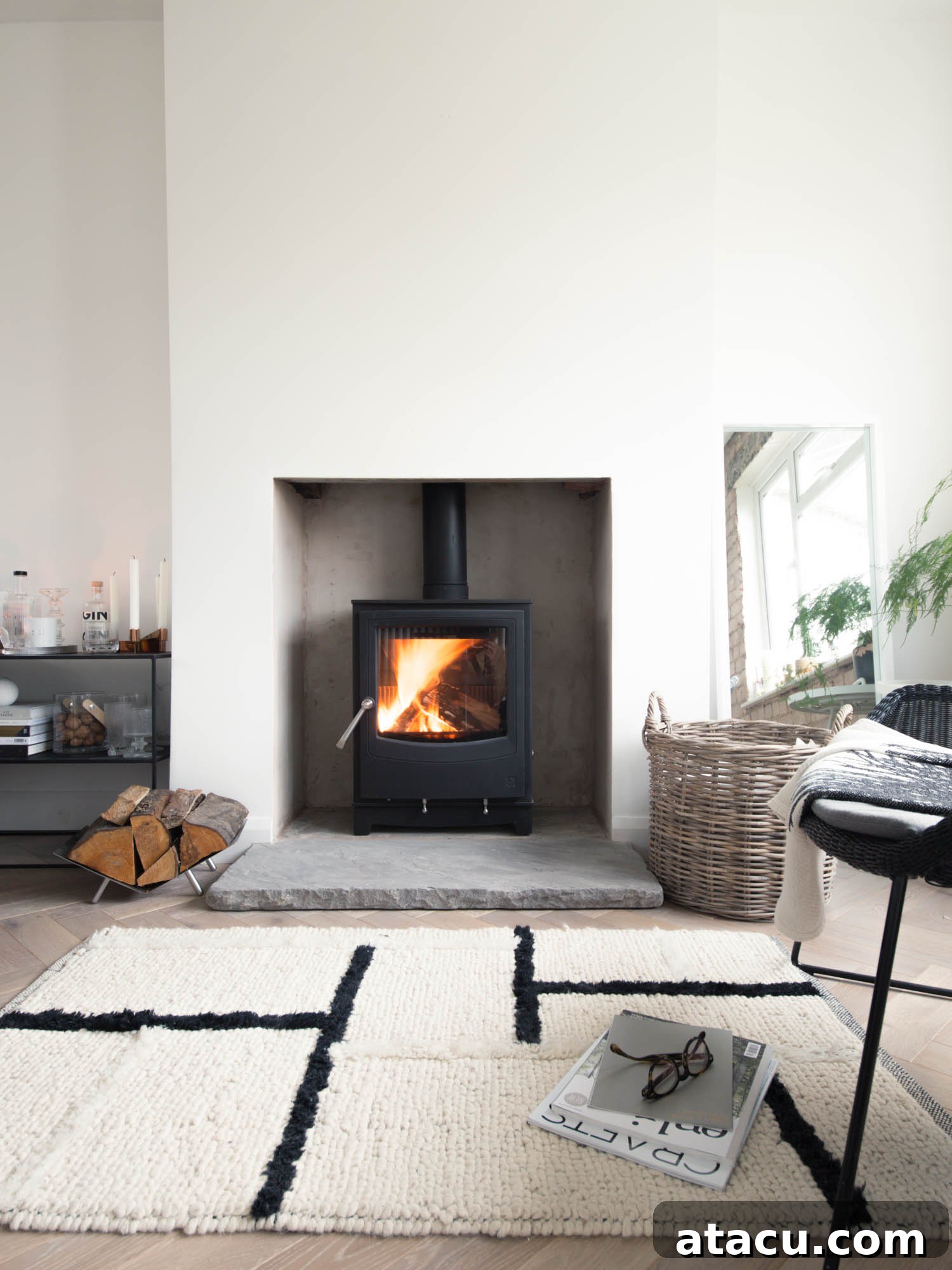
Transforming a house into a truly welcoming home is a journey, often marked by significant personal touches and thoughtful renovations. When we first stepped into our new house, it was a blank canvas, full of potential but lacking the warmth and character that defines a home. We embarked on a renovation adventure, meticulously peeling back old layers and gradually replacing them with elements that reflected our style and aspirations. While many changes contributed to this transformation, one addition stands out as truly foundational in giving our house a heart: the installation of a beautiful wood-burning stove.
A wood-burning stove was high on our wish list from the very beginning. More than just a heating appliance, it represents a focal point, a gathering place, and a source of unparalleled ambiance. Yet, the path to acquiring one was paved with questions and considerations. We wondered about the complex regulations in the UK, the necessary modifications to our existing chimney and hearth, finding a trustworthy and qualified installer, and of course, the overall cost. Beyond these practicalities, a crucial factor for us was ensuring our choice was as eco-friendly as possible, aligning with modern environmental standards.
After thorough research into the diverse range of options available, we ultimately selected the Arada Farringdon stove. Its clean, minimalist design perfectly complemented our aesthetic preferences, but more importantly, it met stringent environmental criteria. This ensured that our chosen stove would provide efficient heating and a cozy atmosphere while minimising its ecological footprint, a commitment that resonated deeply with us. The journey to a warm and welcoming home was now truly underway.
Navigating UK Regulations for Wood Burning Stoves: An Essential Guide
The regulatory landscape for wood-burning stoves in the UK has evolved significantly, particularly in response to growing environmental concerns about air quality. Since our stove was fitted, new rules have been implemented to promote cleaner burning and reduce harmful emissions. As of October 2024, here are the key regulations every homeowner considering a wood burner must be aware of:
1. Ecodesign Regulations: The Standard for Modern Stoves
A pivotal change in the industry, Ecodesign standards came into effect in the UK in January 2022. All new wood-burning stoves sold and installed must now comply with these rigorous requirements. Ecodesign stoves are engineered with advanced combustion technology to significantly reduce emissions of particulate matter (PM2.5), nitrogen oxides (NOx), organic gaseous compounds (OGC), and carbon monoxide (CO). This means they burn wood much more efficiently, extracting more heat from less fuel, and producing fewer harmful pollutants compared to older, less efficient models. When purchasing a new stove, always confirm it is Ecodesign compliant.
2. Approved Fuels: Burning Cleaner for Better Air
The type of fuel you burn is as crucial as the stove itself. Strict regulations now govern which fuels are permissible, particularly within Smoke Control Areas. The sale of wet wood (wood with a moisture content over 20%) and traditional house coal is largely banned across the UK. Instead, you must use:
- Dry Wood: This refers to wood with a moisture content of 20% or less. Look for wood certified under the “Ready to Burn” scheme, which guarantees it meets the required moisture levels. Using dry wood is paramount for efficient burning, reducing smoke, and preventing the build-up of creosote in your chimney, which can lead to chimney fires.
- Manufactured Solid Fuels: These are specially designed solid fuels that produce minimal smoke and emissions. Again, ensure they carry the “Ready to Burn” certification.
Burning approved, dry fuels can reduce harmful emissions by up to 50%, contributing to cleaner air and a more efficient heating system.
3. Smoke Control Areas: Understanding Local Restrictions
Many urban and densely populated areas across the UK are designated as Smoke Control Areas. If your property falls within one of these zones, regulations are significantly stricter. In these areas, only “DEFRA-exempt appliances” can be used to burn solid fuels. These stoves have been tested and approved by the Department for Environment, Food & Rural Affairs (DEFRA) to meet specific emission limits. Furthermore, even with an exempt appliance, you are still restricted to burning only authorised fuels. Non-compliance, whether by using a non-exempt stove or burning unauthorised fuel, can lead to fines and further legal proceedings for repeated or serious violations. It is vital to check if your home is in a Smoke Control Area before purchasing a stove.
4. Installation Rules: Ensuring Safety and Compliance
While planning permission is generally not required for installing a wood burner (unless you are building a new chimney or making significant structural alterations to the exterior of your property), all installations must comply with stringent Building Regulations, specifically Part J (Combustion Appliances and Fuel Storage Systems). These regulations cover critical aspects such as ventilation, flue installation, hearth construction, and the safe distance from combustible materials. For peace of mind and to ensure full compliance, it is highly recommended to use a HETAS-certified installer. HETAS (Heating Equipment Testing and Approvals Scheme) is the official body recognised by the government for competent persons in the solid fuel and biomass industry. A HETAS-certified installer can self-certify the installation, providing you with a crucial Building Regulations compliance certificate upon completion.
Understanding these regulations is the first crucial step if you’re considering adding a wood-burning stove to your home. My own experience, and the subsequent guide below, covers these main considerations to help you navigate the process.
Key Considerations Before Installing Your Wood Burner
Embarking on a wood burner installation project requires careful planning and a clear understanding of the steps involved. Here’s a comprehensive guide to the main things you need to consider:
1. Preparing the Chimney and Fireplace Opening
If your home already boasts an existing chimney, the initial phase often involves preparing the fireplace opening. In our living room, for instance, we started with a standard 1930s fireplace. While removing the old fireplace surround and opening up the brickwork to create a larger recess was a task we undertook ourselves over an afternoon, the actual stove installation is a specialised job best left to a qualified professional. You might consider hiring an installer who also offers general building services, as they can seamlessly handle tasks such as widening the chimney breast, installing a new lintel for structural support, or laying a new hearth stone.
2. Adhering to Wood Burner Installation Regulations
As mentioned, planning permission is typically not required unless you are constructing a completely new chimney or significantly altering the external structure. However, strict adherence to Building Regulations is mandatory. These regulations are designed to ensure safety and efficiency. Your local council’s website will provide detailed information regarding the specific Building Regulations in your area, particularly Part J which covers aspects like flue liners, hearths, and ventilation. A qualified installer will be well-versed in these requirements.
3. Finding a Qualified and Reputable Installer
This is perhaps the most critical step for a safe and compliant installation. In the UK, the most reliable way to find a qualified professional is through the HETAS website. HETAS registered installers undergo rigorous training and assessment to ensure their work meets current Building Regulations. Upon completion, they will provide a Building Regulations compliance certificate. This document is vital as it officially notifies your Local Authority building regulations department that the installation has been carried out safely and legally. This certificate is also essential for validating your home insurance and will likely be requested if you ever decide to sell your property, demonstrating that the work was done to standard.
4. Installing a Wood Burner in a Smoke Control Area
Determining whether your property is in a Smoke Control Area is crucial. These areas, prevalent in many urban locations throughout the UK, impose specific restrictions on solid fuel burning. You can ascertain your status by:
- Contacting Your Local Council: Your local council’s environmental services department can provide definitive information specific to your address.
- Utilising Online Maps:
- For England, consult the Department for Environment, Food and Rural Affairs (DEFRA) interactive map.
- In Scotland, the Spatial Hub tool is a valuable resource.
- Residents in Wales can check via DataMapWales.
- Northern Ireland provides its own dedicated Air Quality Map.
Implications of Living in a Smoke Control Area
If your home is situated within a Smoke Control Area, compliance is non-negotiable:
- Mandatory Use of DEFRA-Exempt Appliances: Only stoves specifically approved by DEFRA, designed to produce minimal emissions, are permitted for burning solid fuels.
- Exclusive Use of Authorised Fuels: You are restricted to burning only dry, “Ready to Burn” wood and approved manufactured solid fuels. The use of wet wood or traditional house coal is strictly prohibited due to their high emission levels.
- Penalties for Non-Compliance: Failure to comply with these regulations, by using a non-exempt appliance or burning unauthorised fuels, can result in significant fines.
Therefore, if you plan to burn wood in a Smoke Control Area, selecting a DEFRA-exempt stove is a prerequisite.
What Exactly is a DEFRA-Exempt Stove?
A DEFRA-exempt stove is an appliance that has undergone rigorous testing and demonstrated its ability to burn solid fuels with significantly reduced smoke emissions, even in designated Smoke Control Areas. Before making a purchase, always verify with the manufacturer, retailer, or your installer that the model you are considering is indeed DEFRA-exempt. A comprehensive list of DEFRA-exempt appliances is available on the official DEFRA Smoke Control website, ensuring you choose a stove that meets all legal requirements for your location.
5. Choosing the Right Model Size: Kilowatt Output Calculation
Selecting a stove with the correct heat output (measured in kilowatts, kW) for your space is vital for optimal performance and efficiency. An undersized stove will struggle to heat the room, while an oversized one will lead to overheating and inefficient burning. To calculate the approximate heating requirement for your room:
- Measure the width, depth, and height of the room in metres.
- Multiply these three figures together to get the room’s volume in cubic metres.
- Divide the total volume by 14 (a common rule of thumb for average insulation).
For example, our living room measures 3.2m wide by approximately 7m deep and 2.4m high. This calculation gave us a heating requirement of 3.84 kW, making a 5kW stove like the Farringdon Small Eco an ideal fit. For larger, open-plan spaces or rooms with particularly high ceilings, you may need a model with a higher output. Always discuss this calculation with your installer for a precise recommendation.
6. Designing the Fireplace and Hearth
The construction of the hearth and the clearances around your stove are strictly governed by Building Regulations to prevent fire hazards. Your hearth, for instance, must extend a minimum distance beyond the front and sides of the stove door, and be made of appropriate non-combustible materials. There are also specific regulations regarding the proximity of the stove to combustible materials like plasterboard walls, wooden beams, or furniture. These regulations significantly influence the design of your fireplace. Before purchasing materials such as decorative tiles or a new hearth stone, it is crucial to consult with your installer or local building regulations inspector. They can advise on the exact dimensions and specifications required, ensuring you order the correct sizes and quantities and comply with all safety standards.
The Installation Process: What to Expect
The actual installation of a wood burner is a meticulous process that typically spans a couple of days, depending on the complexity of the work required. Our HETAS-certified installer managed the entire project seamlessly:
The initial phase involved preparing the chimney, which for us included removing some of the existing bricks to open up the chimney breast. This not only created the necessary space for the stove but also visually enhanced the room, making it feel more expansive. Following this, the back of the fireplace recess was rendered to create a smooth, fire-resistant surface, and a new hearth stone was expertly laid, forming a robust and attractive base for the stove. A vital safety component, a carbon monoxide detector, was also installed to monitor air quality and provide immediate warning in the unlikely event of dangerous fumes. Finally, the stove itself was connected, and a new flue liner was installed within the chimney, ensuring efficient and safe expulsion of smoke and gases. The installer then commissioned the stove and provided the essential Building Regulations compliance certificate.
Choosing and Storing the Right Type of Wood
The performance and environmental impact of your wood burner largely depend on the fuel you use. Wood with a low moisture content is paramount. We exclusively use kiln-dried logs, and the difference compared to regular, unseasoned logs (like those often found at petrol stations) is immediate and noticeable. Wet wood produces significantly more smoke, which not only blackens the stove glass rapidly but also leads to a dangerous build-up of tar and creosote within the flue. This creosote accumulation is a major cause of chimney fires and reduces the efficiency of your stove. To maintain low moisture levels, we store our main log supply outdoors under cover, but we bring a few logs indoors each morning. Keeping them next to the fireplace allows them to acclimatise and ensures they are perfectly dry and ready for an efficient, clean burn later in the evening.
Wood Burner FAQs: Addressing Common Questions
How much does it cost to install a wood burner in the UK?
The cost of installing a wood burner varies widely based on several factors. Key determinants include the extent of preparatory work needed on your existing fireplace (e.g., removing old surrounds and hearths), whether a new lintel is required to support the chimney breast, and if additional rendering or tiling around the stove is desired. The type of flue liner (flexible or rigid) and any chimney repairs will also impact the overall price. As a rough guide, our installation costs, excluding the stove itself, were around £1300. This covered the fitting of a flue liner, opening up the chimney breast, inserting a new lintel, rendering the brick opening, and fitting a sandstone hearth stone sourced from a local architectural salvage yard. Always obtain multiple quotes from HETAS-certified installers to get an accurate estimate for your specific project.
Do you need permission to install a wood burning stove?
Generally, you do not need planning permission for a wood burner installation in the UK, provided there are no significant external structural alterations or if you are not building a new chimney. However, you must always comply with Building Regulations Part J. The installation must be certified by a qualified installer, typically HETAS-registered, who will provide a compliance certificate to your local authority.
Can I install a wood burner myself?
While technically possible to undertake a DIY installation, provided it meets all Building Regulations and is subsequently inspected and certified by your local authority building control or a HETAS-approved third-party body, it is strongly advised against for the average DIY enthusiast. Incorrectly installed stoves pose serious risks, including carbon monoxide poisoning and chimney fires, which can be life-threatening. The complexities of flue lining, ventilation requirements, and hearth construction demand expert knowledge. For safety and peace of mind, hiring a qualified, HETAS-certified installer is by far the best approach.
What can you do on either side of the chimney breast?
The alcoves on either side of a chimney breast offer fantastic opportunities for interior design. You can transform them into stylish storage solutions with built-in shelving, display areas for books and decorative objects, or even create cosy reading nooks. Incorporating subtle wall lights within these alcoves can also create a soft, ambient mood, enhancing the overall warmth and charm of your living space. For more inspiration, explore various ideas for chimney breasts and alcoves.
Will installing a wood burner add value to my home?
While installing a wood burner may not necessarily guarantee a direct increase in monetary value equal to its cost, it can significantly enhance your property’s desirability and marketability to prospective purchasers. Beyond its practical benefits as an efficient heat source, a wood-burning stove creates a powerful design feature and focal point within a room. In my view, it fundamentally transforms a house into a more inviting and cherished home, an intangible value that resonates deeply with many buyers.
The Enduring Charm of a Wood Burner
Since the installation of our stove, lighting it each evening during the cooler autumn and winter months has become a cherished daily ritual. This simple act signifies a profound transition: from the demands of the workday to the tranquility of downtime. The flickering flames and gentle warmth immediately create an atmosphere of relaxation, prompting me to unwind, perhaps pour a drink, and prepare for dinner. It has truly become my favourite part of the day, imbuing our home with a sense of comfort and serenity that only a wood burner can provide.
If you’re contemplating adding this wonderful feature to your own home, you’ll find a wealth of inspiration and ideas on Pinterest, particularly on boards dedicated to fireside designs.
All Images © Design Hunter