In our pursuit of smarter, more sustainable living, finding truly efficient ways to heat our homes has become more critical than ever. It’s no longer just about mitigating the impact of rising energy costs, but about embracing innovative solutions that work harmoniously with our lifestyles and the planet. Infrared panel heating emerges as a standout choice, prioritizing targeted warmth and unparalleled energy efficiency, thereby presenting a compelling alternative to conventional, often outdated heating systems.

For generations, homeowners, particularly in regions like the UK, have relied on familiar heating paradigms such as gas boilers and conventional radiators. This ingrained preference for traditional heating systems has historically made significant shifts in consumer habits a slow process. However, the dramatic surge in energy bills has undeniably catalyzed a widespread re-evaluation among property owners, driving many to explore diverse, more economical heating options.
Infrared heaters offer a truly energy-efficient alternative, though they represent a relatively newer technology in the broader heating market. Consequently, public awareness and understanding of their unique benefits are still developing. Yet, when strategically implemented, these advanced heating solutions can profoundly reduce energy consumption and operational costs. Their core advantage lies in providing localized, direct heating precisely where it’s needed most, minimizing wasted energy and maximizing comfort.
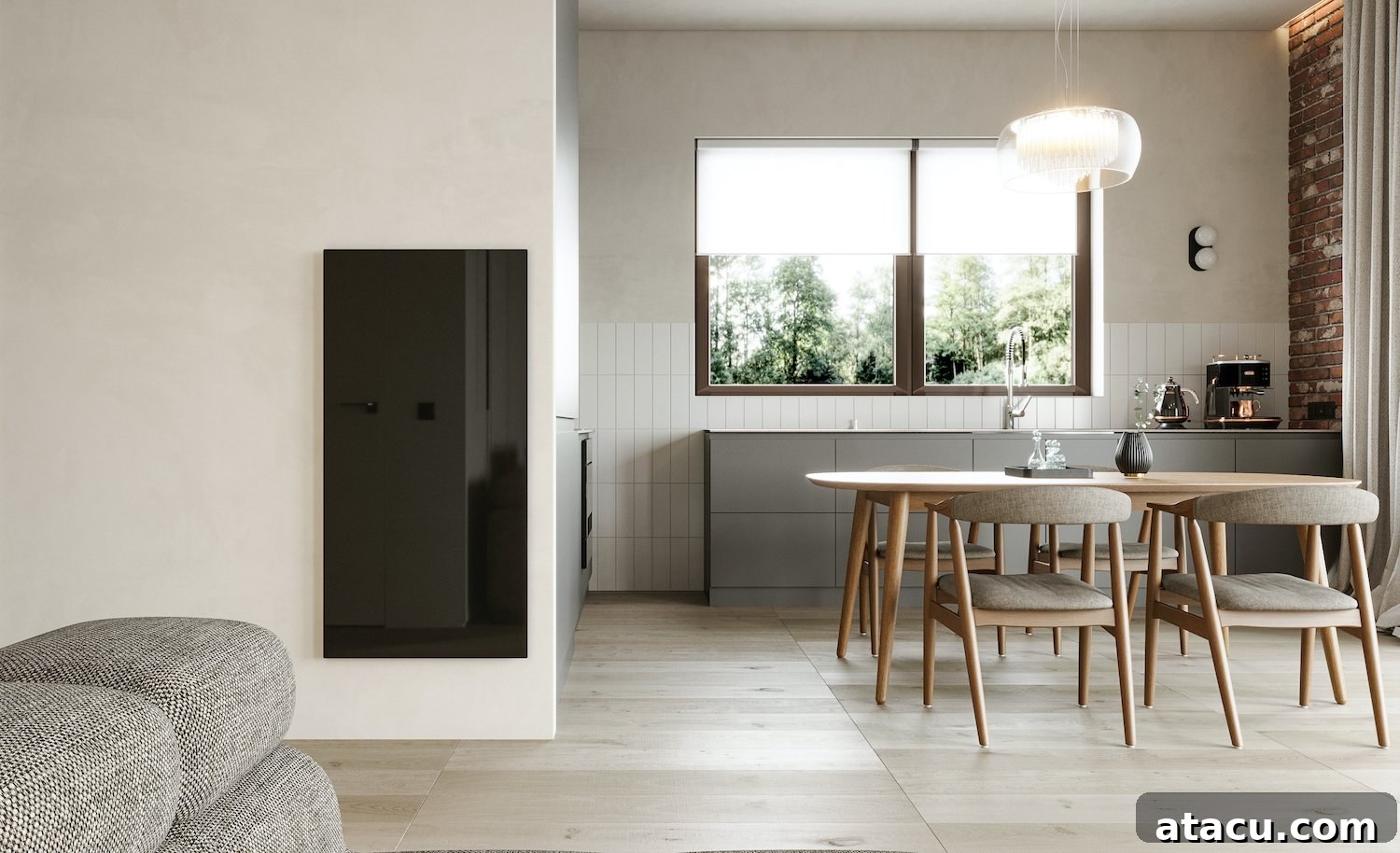
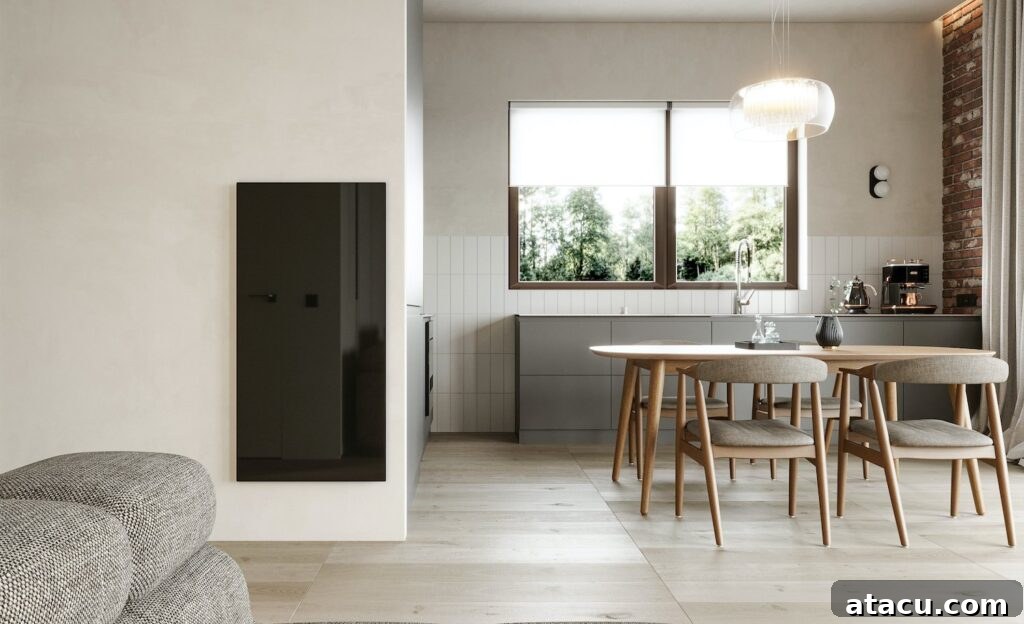
Beyond their functional superiority, infrared heating panels boast a sleek, contemporary design that effortlessly complements a vast array of interior styles. Their ability to blend seamlessly into modern living spaces while delivering exceptional performance makes them an attractive proposition for those who value both aesthetics and efficiency. This harmonious fusion of style and functionality positions infrared panels as a sophisticated choice for forward-thinking homeowners.
What is Infrared Heating? A Modern Approach to Warmth
Infrared panel heating represents a significant leap forward in modern home heating solutions, offering an inherently energy-efficient and profoundly comfortable alternative to conventional systems. Unlike traditional heaters that primarily warm the surrounding air, these innovative panels utilize radiant heat. This means they directly warm objects, surfaces, and people within a room, much like the gentle warmth of the sun on a clear day. The result is an immediate, consistent, and deeply satisfying warmth that permeates your living space without drying out the air or creating drafts.
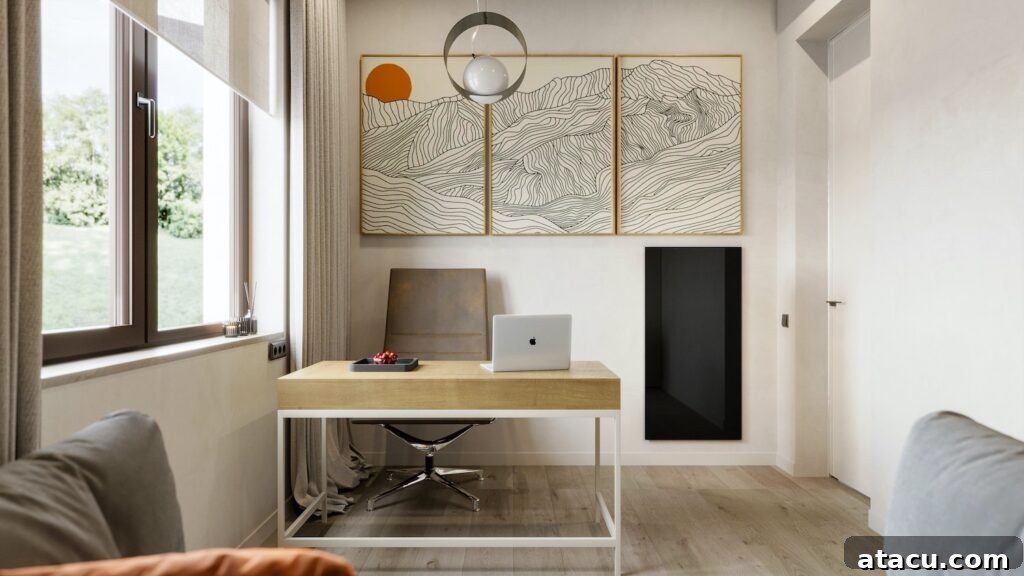
Beyond their exceptional performance, infrared heating panels are also celebrated for their sleek, minimalist design. They seamlessly integrate into any contemporary interior, transforming a functional necessity into an elegant design feature. Available in various finishes and even customizable to blend with artwork, these panels are not just about warmth; they’re about enhancing the aesthetic appeal and overall functionality of your home, making them a prime choice for homeowners seeking both style and substance in their heating solutions.
How Do Infrared Heating Panels Work? Understanding Radiant Heat Technology
Infrared heating panels operate on a remarkably simple yet profoundly effective principle, harnessing the power of electromagnetic energy. They emit far-infrared radiation, a natural and entirely harmless form of heat that is readily absorbed by objects, surfaces, and even people within a room. This direct absorption process efficiently warms everything it touches, creating an enveloping, comfortable, and deeply cosy atmosphere.
The fundamental difference from conventional heating systems lies in this direct warming approach. Traditional systems primarily heat the air, leading to inefficiencies as warm air rises and dissipates, often resulting in uneven temperatures and wasted energy. Infrared panels, conversely, bypass the air, directly delivering warmth to where it’s most needed. This ensures a consistent, pervasive warmth throughout the space, offering homeowners an energy-saving, stylish, and supremely comfortable heating solution.
Many contemporary infrared heating solutions, such as the Kelvin heater from BOLDR, are designed with smart home integration in mind. These advanced systems often include a wireless smart thermostat that can be seamlessly connected to the heating panel via a dedicated mobile application. This connectivity unlocks a sophisticated suite of energy-saving features, allowing users to precisely control temperature, set schedules, and monitor energy usage from anywhere, thereby optimizing efficiency and maximizing comfort with unparalleled ease.

Is Infrared Panel Heating Cheap to Run? Demystifying Operating Costs
One of the most compelling advantages of infrared heating panels is their inherent cost-effectiveness when compared to many traditional heating systems. The primary reason for this economic benefit stems from their operational principle: they directly heat the objects and people in a room, rather than inefficiently expending energy on warming the entire volume of air. This targeted approach significantly reduces energy wastage, translating into tangible savings on your monthly heating bills.
Furthermore, infrared panels are renowned for their rapid warm-up times. Unlike conventional systems that require a longer period to reach optimal temperatures, infrared heaters provide almost instantaneous warmth. This allows for an ‘on-demand’ heating strategy; you can activate them precisely when and where warmth is desired, minimizing their operational duration and thus reducing overall energy consumption. This ability to heat specific zones for shorter periods contributes substantially to lower running costs.
While infrared heating is generally more economical to run, the exact savings will naturally be influenced by several factors. These include your specific usage patterns, the overall size and insulation quality of the space you intend to heat, and, of course, the prevailing electricity costs set by your energy provider. However, the fundamental efficiency of infrared technology consistently positions it as a financially shrewd investment for homeowners aiming to curtail their heating expenses and embrace a more sustainable energy future.
Infrared Panel Heating vs. Traditional Radiators: A Comprehensive Comparison
The distinction between infrared panel heating and traditional radiators lies fundamentally in their method of warmth delivery. Conventional radiators operate by heating the air through convection, creating a cycle where warm air rises and cool air sinks. This often leads to uneven temperature distribution, cold spots, and significant heat loss, particularly in rooms with high ceilings or poor insulation. The constant circulation of air can also stir up dust and allergens, potentially impacting indoor air quality.
In stark contrast, infrared panels emit radiant heat, directly warming people and objects in the room. This targeted approach is inherently more efficient, as it avoids the wasteful process of heating vast volumes of air, much of which can escape through draughts or poorly insulated areas. The warmth felt from an infrared panel is immediate, consistent, and deeply penetrating, creating a comfortable environment that feels warmer at lower ambient air temperatures.
Beyond performance, the design and operational characteristics differ significantly. Infrared panels are notably slim, offering flexible installation options on walls or ceilings, where they remain visually unobtrusive and space-saving. This modern aesthetic presents a sophisticated alternative to the often bulky, floor-space-consuming traditional radiators. Moreover, infrared panels operate in complete silence, with no moving parts, fans, or circulating water, making them a cleaner, quieter, and infinitely more stylish choice for a modern home.

Infrared heating panels are a remarkably versatile heating solution, capable of enhancing comfort and efficiency across a diverse range of residential and even commercial properties. Their suitability often depends on specific needs, existing architectural designs, and personal preferences, but certain types of spaces particularly benefit from their unique characteristics. Here are several scenarios where infrared panel heating provides an exceptionally good fit:
Small Flats or Apartments
For compact living spaces such as small flats or apartments, infrared heating proves to be an excellent choice. Its wall or ceiling-mounted design means it provides effective heating without occupying valuable floor space, which is often at a premium in smaller dwellings. This allows residents to maximize their living area while still enjoying consistent, comfortable warmth.
Buildings with Limited Insulation & Period Properties
Older homes, or those with sub-optimal insulation, frequently struggle with heat loss using conventional systems. Infrared panels offer a powerful solution by directly warming occupants and objects, significantly reducing the amount of heat wasted through walls, ceilings, and floors. This direct heating approach is especially beneficial in period properties where extensive, costly insulation renovations might not be architecturally feasible or desired.
Garden Rooms, Outbuildings, and Workshops
For standalone structures like garden rooms, home offices in outbuildings, or workshops that lack access to a central heating system, infrared panel heating is an ideal, self-contained solution. It delivers efficient and targeted warmth precisely where and when it’s needed, transforming these auxiliary spaces into comfortable, usable areas year-round without the complexity and expense of extending a main heating network.
Rooms with High Ceilings
In homes featuring high ceilings, traditional convection-based heating systems often struggle to efficiently heat the lower, occupied areas, as warm air naturally rises and collects near the ceiling. Infrared panels overcome this challenge by emitting direct radiant heat that warms the lower sections of the room more effectively and precisely, ensuring comfort without the wasteful heating of unused vertical space.
Homes with Large Open-Plan Living Areas
Infrared heating is particularly well-suited for properties with expansive open-plan living areas. By strategically installing multiple panels, homeowners can establish distinct heating zones. This allows for tailored comfort and optimized energy efficiency, as specific areas can be heated to different temperatures or activated independently based on how and when various parts of the open-plan space are being utilized.
Bathrooms and Kitchens (Humid Environments)
Infrared panels are excellent for bathrooms and kitchens. Their direct heating action quickly warms surfaces like tiles, towels, and skin, combating dampness and preventing mold growth. Unlike fan heaters that circulate air and humidity, infrared heat dries the air and surfaces, contributing to a healthier environment in these often-humid rooms.
Is Infrared Heating Safe? Addressing Health and Environmental Concerns
A common question regarding new heating technologies pertains to their safety. When properly installed and used according to manufacturer guidelines, infrared heating is not only safe but also highly effective and beneficial. It operates by emitting far-infrared radiation, which is a completely natural and harmless form of heat. This is the very same type of warmth we experience from natural sunlight, but crucially, without any of the harmful ultraviolet (UV) rays associated with sun exposure.
Infrared panels provide a remarkably clean and healthy heating option. They do not burn oxygen or produce any fumes, carbon monoxide, or other combustion byproducts, unlike many traditional heating methods. Furthermore, because they do not rely on circulating air to distribute heat, infrared systems significantly reduce the movement of dust, allergens, and airborne particulates. This can be a profound benefit for individuals suffering from allergies, asthma, or other respiratory sensitivities, contributing to a cleaner and more breathable indoor environment.

Infrared Panel Heating: A Balanced Look at Pros and Cons
Understanding any new technology requires a balanced perspective, acknowledging both its strengths and potential limitations. Infrared panel heating, while offering numerous advantages, also has specific characteristics that homeowners should consider.
Advantages of Infrared Heating
- Exceptional Energy Efficiency: By directly heating objects and people, rather than the air, infrared panels drastically reduce heat loss and wasted energy, leading to lower utility bills and a smaller carbon footprint.
- Targeted, Instant Warmth: Infrared heat provides immediate comfort, similar to sunlight. This allows for effective zone heating, where only occupied areas are warmed, further optimizing energy use.
- Silent Operation: With no moving parts, fans, or circulating water, infrared panels operate in complete silence, contributing to a tranquil and undisturbed indoor environment.
- Improved Air Quality: The absence of air circulation minimizes the spread of dust, allergens, and pollutants, making it a healthier heating option, particularly beneficial for allergy and asthma sufferers.
- Sleek, Space-Saving Design: These slim panels can be wall or ceiling-mounted, freeing up valuable floor space and integrating seamlessly into modern interior aesthetics, often appearing as subtle design elements or even bespoke artwork.
- Easy and Flexible Installation: Compared to complex central heating systems, infrared panels typically offer a simpler installation process, often requiring only an electrical connection.
- Reduced Dampness and Mold: By warming surfaces directly, infrared heat helps to dry out walls and prevent condensation, thereby inhibiting mold growth and contributing to a healthier home structure.
Infrared Heating Panels Disadvantages
- Potentially Higher Initial Investment: The upfront cost for infrared heating panels can sometimes be higher than that of basic traditional electric heaters. However, this initial outlay is often offset by significant long-term energy savings.
- Effectiveness in Very Large, Poorly Insulated Spaces: While highly efficient, for extremely large, cavernous rooms with very poor insulation, relying solely on infrared panels as the primary heat source might require a higher number of units or supplemental heating to maintain peak comfort during severe cold spells. Strategic placement and sufficient wattage are key to overcoming this.
- Requires Line of Sight: Like sunlight, infrared heat needs a clear line of sight to the objects and people it is warming. Obstructions can create shadows or cold spots, requiring careful planning of panel placement.
- Dependent on Electricity: As an electric heating solution, running costs are tied directly to electricity prices. However, their superior efficiency often means they consume less electricity overall compared to other electric heating options.
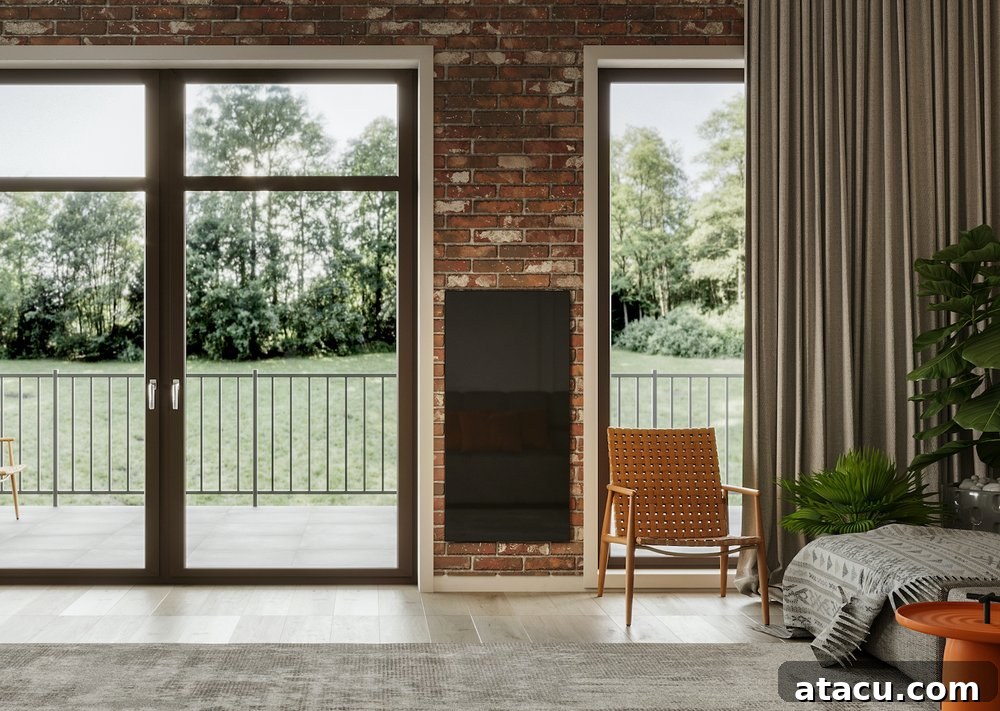
In summary, infrared panel heating presents a compelling, stylish, and highly energy-efficient alternative to conventional heating systems. While the initial investment might seem a consideration, its profound ability to deliver targeted, comfortable warmth, significantly reduce energy consumption, and seamlessly complement contemporary interior designs makes it an increasingly attractive and compelling choice. For homeowners seeking a smarter, more sustainable, and ultimately more economical way to stay warm and enhance their living environment, infrared heating truly stands out as a forward-thinking solution.
All images courtesy of BOLDR
Save to Pinterest