
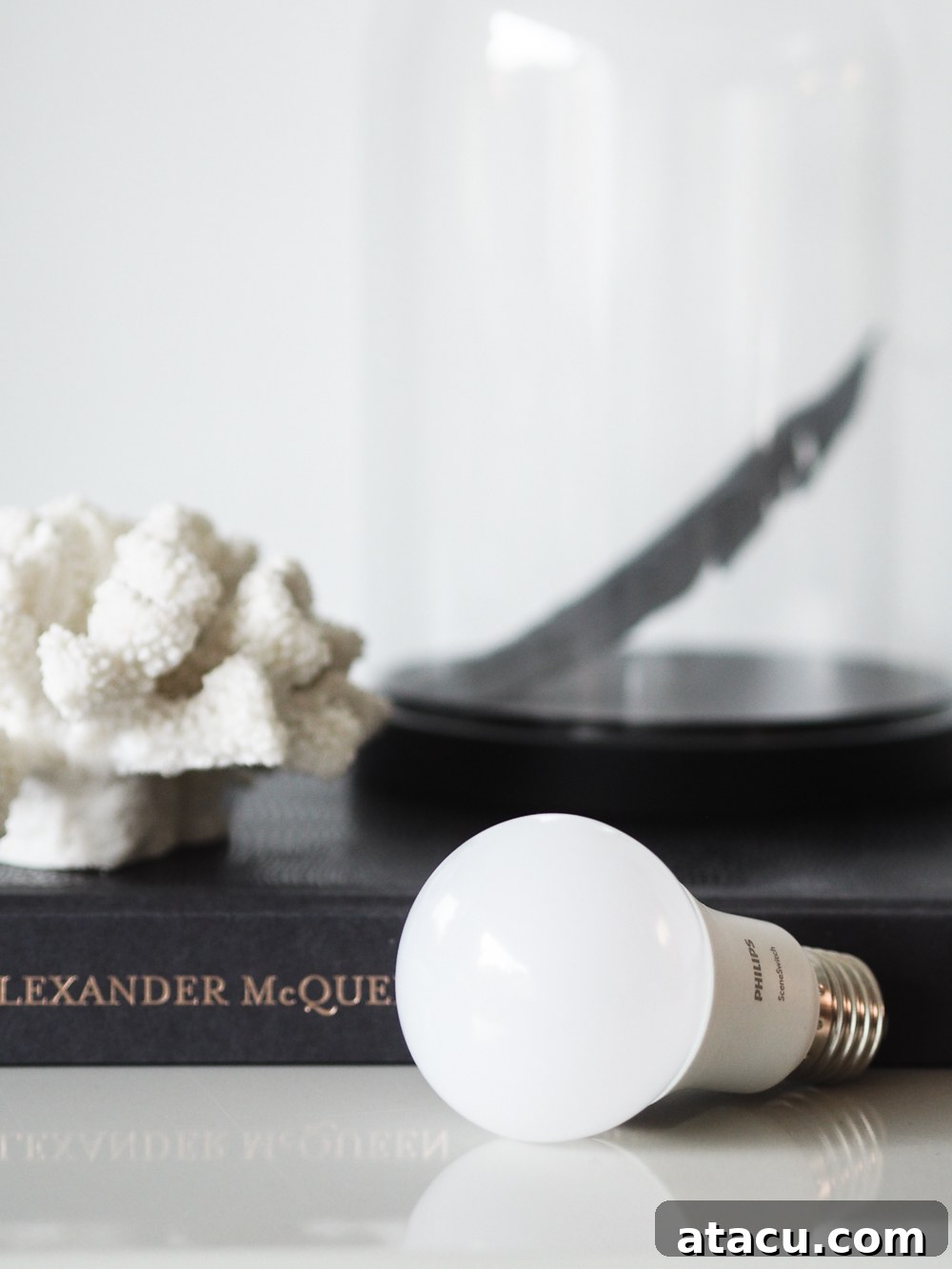
The Unsung Hero: Reimagining the Light Bulb with Philips SceneSwitch
In the grand tapestry of human innovation, some inventions stand as monumental pillars, shaping the very fabric of our daily existence. Among these, the humble light bulb, often taken for granted, holds an undeniable place. We interact with it countless times a day, yet rarely pause to appreciate its profound impact on society, transforming nights into productive extensions of day and fostering environments of warmth and security. Like running water or gas, artificial illumination is perceived as a mere utility, its true value only becoming apparent in its sudden absence – a stark reminder during a power cut or when a bulb unexpectedly blows.
For decades, the evolution of lighting technology has primarily focused on the mechanics of illumination itself. From the revolutionary glow of incandescent filaments to the more efficient halogen, then the energy-saving compact fluorescent lamps (CFLs), and finally to the current dominance of Light Emitting Diodes (LEDs), each advancement brought improvements in energy consumption, operational safety, and longevity. However, a crucial aspect of user experience remained largely overlooked: dynamic control over the light’s intensity. Historically, selecting a light bulb meant committing to a specific brightness, with any subsequent desire to vary the ambiance requiring the installation of specialized dimmer switches, an often inconvenient and costly endeavor.
The Evolution of Illumination: A Journey Towards Efficiency
The history of artificial lighting is a testament to human ingenuity. Thomas Edison’s practical incandescent light bulb, introduced in the late 19th century, literally brought light to the masses, extending the workday and transforming urban landscapes. These bulbs, while revolutionary, were highly inefficient, converting most of their energy into heat rather than light, leading to shorter lifespans and higher energy bills. Despite these drawbacks, their immediate impact on productivity, safety, and social life was immeasurable, solidifying their status as a foundational design classic.
The 20th century saw gradual refinements, with halogen bulbs offering a brighter, whiter light and slightly improved efficiency, though still generating significant heat. The true shift towards energy conservation began with Compact Fluorescent Lamps (CFLs). These bulbs delivered substantial energy savings and longer lifespans compared to incandescent and halogen alternatives. Yet, CFLs came with their own set of compromises, including slower warm-up times, the presence of mercury, and often a less aesthetically pleasing light quality, particularly in early models. Their dimming capabilities were also notoriously limited and often required specific, costly dimmer switches.
The advent of Light Emitting Diodes (LEDs) marked a genuine paradigm shift in the lighting industry. LEDs boast unparalleled energy efficiency, consuming a fraction of the power of traditional bulbs while offering significantly extended lifespans, often lasting for decades. They operate at cooler temperatures, are more durable, and offer incredible versatility in terms of color temperature and design. This technology has not only driven down energy costs for consumers and businesses but has also paved the way for entirely new forms of lighting design and smart home integration. LEDs are now the gold standard, offering a sustainable and high-performance solution for virtually every lighting need.
Beyond Efficiency: The Quest for Flexible Lighting Control
While the technological advancements in light bulb efficiency have been nothing short of remarkable, a persistent gap remained in how users could interact with and control their lighting environments. Traditional thinking dictated that you chose your light bulb for a specific purpose – a bright bulb for task lighting, a softer one for ambient illumination. Once installed, that was largely the extent of your control. Changing the mood or functionality of a room meant physically swapping bulbs or, more elaborately, installing expensive dimmer switches that often required specific wiring or professional setup.
This “one size fits all” approach to in-room lighting presented a significant limitation. Imagine a living room that serves as a vibrant workspace during the day, a cozy sanctuary for reading in the evening, and a bright hub for family gatherings. Under traditional lighting paradigms, achieving these diverse atmospheres would necessitate multiple light sources, complex wiring, or constant bulb changes. The inability to dynamically adjust brightness without significant investment or effort meant that many homeowners and renters were simply “stuck” with the initial point-of-purchase decision, unable to adapt the ‘look and feel’ of their illuminated space to evolving needs or moods. This highlights a critical oversight in user-centric design within the lighting sector.
Enter Philips SceneSwitch: A Revolution in Simplicity
It was with this context that receiving a box of Philips’s new LED SceneSwitch light bulbs felt like a revelation. The immediate thought was, “now there’s a truly brilliant idea… how has nobody thought of this before?” These bulbs look and fit just like any standard LED bulb, seamlessly integrating into your existing fixtures. However, their brilliance lies in their ingenious functionality: they offer three distinct brightness settings, which can be cycled through using your everyday on/off light switch. It’s a marvel of user-friendly innovation that bypasses the need for any additional hardware or complex installations.
The Philips SceneSwitch technology allows you to effortlessly toggle between a powerful 100% bright setting, ideal for focused tasks or general illumination; a comfortable 40% natural light option, perfect for everyday activities and creating a balanced atmosphere; and a gentle 10% cosy setting, designed to foster relaxation and intimate moments. The magic happens through simple, sequential on/off cycles of your existing wall switch. Each flick of the switch communicates with the bulb, instructing it to transition to the next preset light level. This intelligent communication eliminates the need for any special dimmers or smart home hubs, making advanced lighting control accessible to absolutely everyone.
Intelligent Features for Enhanced Living
Beyond its core functionality, the SceneSwitch boasts an auto-memory feature, a seemingly small detail that significantly elevates the user experience. This intelligent memory function ensures that when you turn the light back on, it remembers your previously selected brightness setting. This means if you left the light on the cosy 10% setting last night, it will greet you with the same warm glow the next time you flick the switch, preventing the need to cycle through settings unnecessarily. This subtle yet impactful feature underscores Philips’ commitment to intuitive design and user convenience, demonstrating a deep understanding of how people interact with their home environments.
Furthermore, because the SceneSwitch is built upon robust LED technology, users inherently benefit from all the advantages associated with modern LED lighting. This includes dramatically lower energy consumption compared to older bulb types, resulting in reduced electricity bills and a smaller carbon footprint. LEDs also generate very little heat, contributing to a safer and more comfortable indoor environment, particularly important in smaller spaces or enclosed fixtures. Crucially, the exceptional longevity of LED bulbs means fewer replacements, saving time, money, and reducing waste, making the SceneSwitch a smart, sustainable, and reliable lighting solution for any home.
Transforming Ambiance with Unprecedented Simplicity
The beauty of the Philips SceneSwitch lies in its elegant simplicity: one bulb, three distinct settings, and an installation process that is literally as easy as changing a light bulb. This innovation empowers users to transform the ambiance of any room at a moment’s notice, tailoring the lighting to match specific activities, moods, or times of day. Imagine starting your day in the kitchen with 100% bright light for preparing breakfast, then switching to 40% natural light for a casual lunch, and finally dimming to 10% cosy light for a relaxing evening meal. All this without ever leaving the room to adjust a dimmer or fumbling with a complex app.
This level of adaptable control is particularly beneficial in multi-functional spaces, such as open-plan living areas, home offices, or even bedrooms. A bedroom might require bright light for getting dressed, a softer natural light for reading, and a very dim, cosy glow for winding down before sleep. With SceneSwitch, a single fixture can fulfill all these roles, providing unparalleled flexibility without the cost or complexity of traditional smart lighting systems. This makes dynamic lighting accessible to a broader audience, demonstrating that cutting-edge features don’t always require cutting-edge complexity or expense.
Beyond the Bulb: The Future of User-Centric Lighting
While the SceneSwitch offers a delightfully straightforward approach to variable lighting, it also serves as a poignant example of the broader trend towards user-centric design in the lighting industry. As smart home technology becomes more prevalent, the demand for personalized and adaptable environments continues to grow. SceneSwitch addresses this demand for simplicity, offering a solution that bridges the gap between basic fixed lighting and advanced, often expensive, smart home setups. It caters to those who desire dynamic control without the commitment to apps, hubs, or voice commands.
This innovation highlights how even the most fundamental elements of our homes can be reimagined to enhance comfort, convenience, and energy efficiency. It’s a testament to the power of thoughtful design that takes common frustrations and turns them into elegant, practical solutions. We are excited to integrate these bulbs into various settings around our home, experimenting with them in different lighting fixtures and contexts to fully appreciate their versatility and performance. We look forward to sharing our detailed findings and user experience insights with you soon, further exploring how this simple invention truly transforms everyday illumination.
Words by Graham Powell & images by Helen Powell. Posted in collaboration with Philips.