
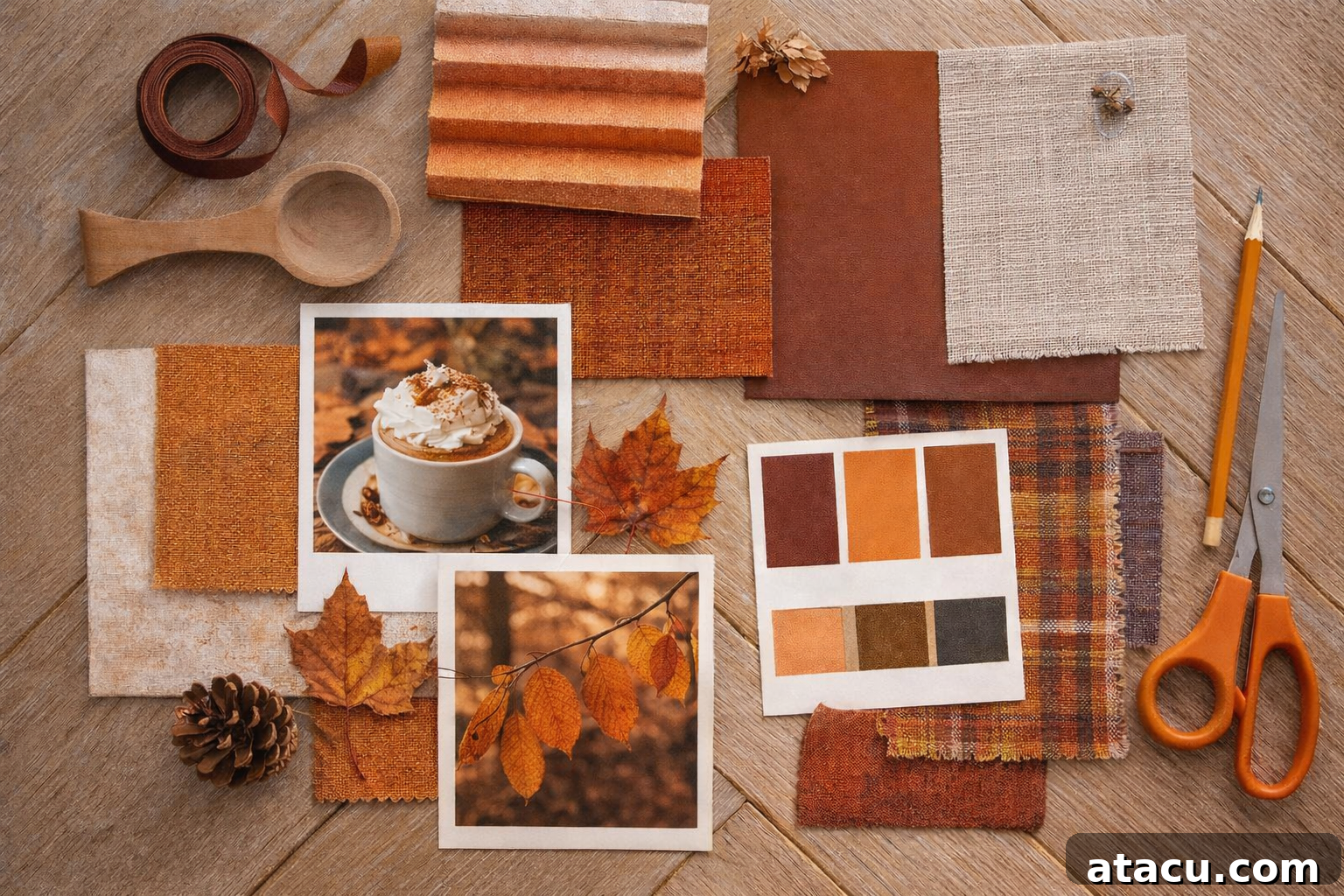
As the leaves begin to turn and a crisp breeze fills the air, there’s an undeniable shift in the atmosphere. This seasonal transition often sparks a renewed sense of inspiration and a desire to refresh our surroundings, our wardrobes, or even our creative projects. If you find yourself brimming with new ideas and a yearning to bring them to life, there’s no better tool to harness that creative energy than a well-crafted mood board.
Whether you’re embarking on a major home renovation, conceptualizing a unique DIY endeavor, or simply seeking an outlet for your pent-up artistic spirit, a mood board serves as an invaluable visual guide. It’s more than just a collage of pretty pictures; it’s a strategic framework that helps you organize, explore, and refine abstract concepts and nascent ideas before committing to significant changes or investments. By visually articulating your vision, a mood board provides clarity, coherence, and a tangible direction for your creative journey. But how exactly do you go about creating a mood board that truly resonates and empowers your creative process? Let’s dive into the essential steps to unlock your visual potential and craft a truly impactful mood board.
Embracing the Spirit of the Season: Finding Your Core Inspiration
The first and arguably most crucial step in creating an inspiring mood board is to deeply connect with the essence of your chosen theme, particularly if you’re drawing inspiration from the changing seasons. What specific elements of this time of year captivate you? Is it the rich, earthy color palette of autumn, with its burnt oranges, deep reds, and golden yellows? Perhaps it’s the comforting textures of chunky knits, flannel, and rustic wood, or the evocative themes of cozy evenings, harvest abundance, and nostalgic warmth. Every season, like autumn, carries a unique set of sensory details that can define your entire creative direction.
To truly immerse yourself in this seasonal spirit, engage in activities that bring you closer to its core. Take leisurely walks through parks or forests, observing the changing foliage and collecting natural elements like vibrant leaves, acorns, or fallen branches. Capture these moments with your camera, not just as simple photographs, but as visual notes of color combinations, light quality, and texture. Journal your observations, noting down specific feelings, smells (like pumpkin spice, woodsmoke, or damp earth), and sounds (rustling leaves, crackling fires) that evoke the season’s mood. These personal, tangible experiences will later become powerful anchors, guiding your visual choices and ensuring your mood board reflects an authentic emotional connection to your theme.
Consider the broader cultural influences of the season as well. Holidays, traditions, culinary delights, and even fashion trends all contribute to the overarching seasonal narrative. For autumn, this might mean imagery of warm beverages, cozy interiors, festive gatherings, or layered fashion. By absorbing and documenting these multi-sensory details, you build a rich foundation of inspiration that goes beyond mere aesthetics, allowing your mood board to communicate a deeper, more evocative story.
Choosing Your Canvas: Digital vs. Physical Moodboards
Once you’ve gathered your initial wave of inspiration, the next pivotal decision is selecting the right format for your mood board. The world of mood boards offers a spectrum of possibilities, ranging from entirely digital platforms to deeply tactile, hands-on creations. The ideal choice hinges on your personal workflow, project scope, collaborative needs, and natural inclinations.
The Advantages of Digital Moodboards
In the digital realm, platforms like Pinterest, Canva, Milanote, and PureRef stand ready to transform your ideas into dynamic visual narratives. Digital mood boards excel in their versatility and accessibility. They allow for effortless collection and organization of vast amounts of imagery, enabling you to save and categorize thousands of ideas with just a few clicks. Sharing your vision with collaborators, clients, or friends becomes a seamless process, facilitating feedback and collective refinement. Tools like Canva offer advanced features such as layers, text overlays, and graphic elements, allowing for sophisticated compositions and branding exercises. Digital formats are also highly editable, making it easy to swap out images, adjust layouts, and experiment with different elements without permanent commitment. This flexibility is particularly beneficial for projects that require frequent iterations or a quick turnaround, or for those who prefer to work entirely within a virtual environment.
The Enduring Charm of Physical Moodboards
Conversely, there’s an undeniable allure and profound intimacy in the analogue approach. A physical mood board, created on a corkboard, foam core, or within a dedicated sketchbook, offers a deeply immersive and sensory experience. The act of cutting out images from magazines, pinning fabric swatches, gluing dried flowers, or sketching directly onto the board engages your hands and mind in a unique way, fostering a mindful connection to your creative process. The tangible nature of a physical board allows you to experience textures firsthand, arrange elements with a tactile immediacy, and even incorporate three-dimensional objects. This hands-on method can be incredibly therapeutic, providing a welcome break from screen time and allowing for a more personal, unfiltered expression of your vision. It’s perfect for projects where the tactile feel of materials is paramount, such as interior design, fashion styling, or crafting.
The Power of a Hybrid Approach
And who says you must choose one over the other? A hybrid approach often yields the best of both worlds. You might begin your inspiration hunt digitally, leveraging Pinterest to curate broad themes and collect a vast library of images. Then, you could print out your favorite selections and combine them with physical swatches, found objects, and personal sketches on a corkboard. This blend allows for the expansive reach of digital resources combined with the personal touch and sensory depth of a physical creation. Consider your project’s specific needs: for a professional branding project, a digital board might be more practical for presentations, while a personal home decor refresh might benefit from a more tactile, physical experience. Ultimately, the best format is the one that empowers you to explore your ideas most effectively and joyfully.
The Great Inspiration Hunt: Curating Your Visual Story
With your canvas chosen, it’s time for the most exhilarating phase: the inspiration treasure hunt. This is where you allow yourself to go “feral” in your quest for visual stimuli, both online and in the real world. Think of yourself as a detective, gathering clues that piece together your desired aesthetic. Cast a wide net: flip through glossy fashion and home decor magazines, delve into the curated feeds of Instagram and Pinterest, explore photography books, visit art galleries, or even collect fabric swatches from textile shops. Nature itself is an endless source of inspiration, offering intricate patterns, harmonious color combinations, and organic textures. The world truly is your oyster.
During this initial collection phase, resist the urge to overthink or meticulously curate. The goal is quantity over immediate quality. Gather anything and everything that catches your eye, evokes a feeling, or sparks a flicker of interest. You’ll have ample opportunity to refine and edit later. The key is to capture those gut reactions without judgment. However, as you collect, ensure you’re consciously covering a few essential visual categories that will form the backbone of your mood board:
- Color Palettes: Beyond just individual colors, look for combinations that resonate. Pay attention to how colors interact in photographs, natural landscapes, or art pieces. Are you drawn to warm, inviting tones; cool, serene hues; or vibrant, energetic contrasts? Collect swatches, paint chips, or images with dominant color schemes.
- Textures: Textures add tactile depth and sensory richness. Look for examples of rough woods, smooth ceramics, plush velvets, rustic linens, metallic sheens, or delicate lace. Consider how these textures make you feel and how they would translate into your project.
- Patterns: Patterns bring dynamism and visual interest. Whether it’s a geometric print, a subtle floral motif, an abstract design, or a classic stripe, patterns can define a stylistic direction and add personality to your board.
- Lifestyle Imagery: This category is crucial for conveying the overall feeling and aspiration behind your theme. Look for images that depict people, activities, or environments that embody the mood you want to create. For a seasonal board, this might be a cozy scene by a fireplace, an outdoor autumn picnic, or someone enjoying a warm drink. These images transcend pure aesthetics, communicating the desired atmosphere and emotional context.
As you collect, push beyond mere aesthetic appeal. For each item, pause and ask yourself: “What does this make me feel?” The emotions each image evokes are far more critical than just its visual attractiveness. Your mood board’s primary purpose is to communicate a feeling, an atmosphere, or a desired experience, not just a look. By focusing on emotional resonance, you ensure your final creation will be truly impactful and authentic.
Defining Your Narrative: Identifying the Core Theme
You’ve journeyed through the season’s beauty, amassed a treasure trove of inspiration, and chosen the perfect format for your visual exploration. Now comes the moment to distill that abundance into a cohesive, central theme. This step is about giving your mood board a clear voice and direction, transforming disparate elements into a unified narrative.
Start by reviewing all the images, colors, and textures you’ve collected. Look for recurring motifs, dominant emotions, or overarching styles. What story is trying to emerge? To help define this, think of your overarching vision and try to encapsulate it using three to five descriptive keywords. For an autumn theme, these might be “cozy,” “rustic,” “warm,” “inviting,” and “natural.” For a fashion project, they could be “minimalist,” “elegant,” “modern,” and “timeless.” Other examples might include “serene,” “playful,” “cheeky,” “opulent,” “bohemian,” or “industrial.” These keywords will act as your guiding principles, ensuring every element you place on the board contributes to the intended feeling.
Once your keywords are established, identify a “mini-palette” of “must-have” elements. These are the key visuals, the “stars of the show,” that most strongly embody your core theme and keywords. They might be a specific hero image, a signature color, a dominant texture, or a particular pattern that resonates deeply with your vision. These foundational elements will serve as the anchors for your overall composition, providing a strong visual backbone around which all other elements will coalesce. They ensure your mood board doesn’t become a scattered collection, but rather a focused and impactful representation of your creative intent.
The Art of Arrangement: Bringing Your Vision to Life
This is where the magic truly happens – the moment you breathe life into your collected inspirations. Arranging, layering, and curating your elements is an intuitive process, a dialogue between your inner vision and the tangible materials before you. There are no rigid rules here; instead, embrace experimentation and trust your inner art critic to guide you.
Begin by grouping elements that share a common thread, whether it’s by color family, texture type, or thematic connection. For instance, all your images featuring warm wood tones might go together, or all items with a plush, cozy texture. Don’t be afraid to experiment with different layouts. Try overlapping images to create depth and visual interest, or space them out to allow each element to breathe and stand on its own. Layering is key to creating a rich and dynamic composition; place smaller details over larger background images, or tuck fabric swatches beneath complementary photographs.
As you arrange, pay close attention to the visual flow of your mood board. Your eye should naturally move across the composition, encountering elements in a pleasing and logical sequence. Consider creating a focal point – a dominant image or cluster of elements that immediately draws attention and sets the tone. Balance is also crucial; avoid heavy concentrations of imagery in one area and aim for an even distribution of visual weight. Step back frequently to assess the overall impression. Does each element contribute effectively to the intended mood? Is there a harmonious balance between contrast and cohesion? Enjoy this iterative process, allowing yourself the freedom to move, remove, and reposition until the arrangement feels just right. This is where your unique aesthetic perspective shines through, transforming a collection of images into a compelling visual narrative.
Adding Depth and Personality: The Finishing Touches
With the main composition complete and your vision taking clear shape, it’s time to refine and personalize your mood board with those thoughtful finishing touches. These small, often overlooked details are what elevate a good mood board to a truly exceptional one, imbuing it with deeper meaning and sensory appeal.
Think about elements that add a layer of personal history or a unique tactile dimension. Perhaps you have a collection of favorite quotes or lyrical passages that perfectly encapsulate your chosen theme, which you’ve meticulously jotted down in notebooks over the years. Integrate these with elegant typography or handwritten notes. Small sketches, doodles, or hand-drawn motifs can inject a personal, artistic flair. Fabric samples from past purchases, like a luxurious velvet or a rough-hewn linen, which you couldn’t bring yourself to discard, now find a meaningful home, adding tactile richness and connecting directly to interior design aspirations. Pressed leaves, dried flowers, small twigs, or interesting stones collected during your seasonal walks can bring organic elements and a profound connection to nature directly onto your board. All these seemingly disparate items finally come into their own, working in concert to deliver a more sensory experience and deepen the emotional connection to your theme.
For those creating a physical mood board, consider how it will interact with its environment. Integrating elements like small pieces of wall art that echo your vision can be incredibly impactful. Imagine a miniature print of an autumn landscape or an abstract piece with colors mirroring your palette, placed strategically on your board or adjacent to it. This technique is particularly effective for interior design projects, as it helps you visualize how seasonal colors, textures, and themes can seamlessly translate from your inspiration board into the tangible reality of your home, creating a cohesive and beautifully curated space.
Beyond Aesthetics: Your Moodboard as a Strategic Compass
It’s crucial to understand that your mood board is far more than just a pleasing visual exercise; it is a potent, practical tool—a strategic compass, in fact—designed to guide and streamline your creative decisions across a multitude of applications. Its power lies in its ability to translate abstract ideas into a clear, actionable visual blueprint.
In the realm of interior design, a mood board can inform everything from primary color schemes and furniture textures to lighting choices, wall art displays, and the precise selection of seasonal decor. It helps you visualize how different elements will interact within a space, ensuring a harmonious and cohesive aesthetic before you even purchase a single item. For fashion enthusiasts, it can be an indispensable guide for wardrobe curation, inspiring outfit combinations, accessory choices, and even shaping your entire personal style through the lens of a particular season or trend. It helps you identify gaps in your wardrobe and shop with purpose, aligning purchases with your desired aesthetic.
Beyond personal projects, mood boards are invaluable for professional endeavors. In personal branding and business development, a mood board can establish a compelling visual identity, guiding logo design, website aesthetics, social media content, and even the tone of your brand’s voice. For event planning, whether it’s a wedding, a corporate gala, or a themed party, a mood board ensures that every detail—from floral arrangements to table settings and invitations—aligns with the overarching vision. Creative professionals, such as photographers, writers, or artists, can use mood boards to define the aesthetic for a photoshoot, develop character profiles, or spark new ideas for an art series. Even for broader lifestyle planning, a mood board can help articulate desired atmospheres, aspirations, and goals, translating abstract dreams into concrete visual inspiration.
By providing such clarity and a defined visual direction, your mood board minimizes costly mistakes, saves time, and empowers you to make confident, informed creative choices. It serves as a constant reference point, ensuring that every decision contributes to your overarching vision. And the best part? If this creative exploration was enjoyable and fruitful, you can always recreate the process, adapting it for the next season or a new project, continuously fueling your inspiration.
Embrace the Process: Play, Pin, Repeat
Congratulations! You’ve successfully navigated the exciting journey of creating your very own mood board, your personal cheat sheet for inspiration in every facet of life. It’s important to release any pressure for it to be “perfect” – chances are, it isn’t, and that’s precisely its greatest strength. A truly authentic mood board is a reflection of you, a vibrant tapestry of what sparks joy, ignites your imagination, and inspires you to move through life in the most fulfilling way possible – your way.
The beauty of this creative exercise lies in its cyclical nature. Each new season, each fresh aspiration, presents another compelling reason to reconnect with the world around you, appreciate the unique gifts it bestows, and playfully interact with those inspirations. It’s an invitation to engage your senses, unleash your creativity, and continuously refine your personal aesthetic. So, grab your scissors, open your digital canvas, or simply start collecting those captivating moments. Let the fun begin, and let your mood board be a perpetual source of joy and guidance on your creative journey.